
When anglers start researching “sea conditions around Cabo in February for offshore fishing” they’re really asking two questions at once: What will the ocean feel like day-to-day, and how do those conditions affect what happens on the fishing grounds? In Cabo San Lucas, February is one of the most talked-about months of the year not just because of the fish but because the sea conditions create a unique blend of opportunity, comfort, and strategy.
In this detailed long-form guide, we’ll explore everything you need to know about weather, swell, water temperature, winds, tides, current lines, and what that means for offshore anglers fishing with Blue Sky Cabo Fishing and Tours, the charter team with years of experience navigating these waters and putting clients on world-class catches.
Contact Blue Sky Cabo
- Reserve your trip: Blue Sky Cabo
- Read real reviews: Blue Sky Cabo Fishing and Tours
- Google Reviews: Blue Sky Cabo
- See daily updates: Blue Sky Cabo
- Watch Cabo fishing action: Blue Sky Cabo
Why February Sea Conditions Matter for Offshore Fishing in Cabo
Cabo San Lucas sits at the junction of the Pacific Ocean and the Sea of Cortez. What that means is constant interplay between currents, wind, and thermoclines, the invisible lines where water temperatures shift. In February, those elements settle into patterns that are actually quite predictable compared to other parts of the year.
When you pair reliable sea conditions with experienced captains who read the water daily, it’s no surprise that anglers planning February trips ask specifically about “sea conditions” before anything else. Understanding the ocean’s personality around Cabo in February helps you:
- Choose the right boat
- Decide on trip length (half-day vs full-day)
- Pick appropriate tackle and bait
- Know what weather and sea states to expect at precise departure times
- Make the most of offshore fishing opportunities
Blue Sky Cabo’s captains check multiple forecast models, local tide tables, and real-time sea state reports every morning before you step on the dock. That preparation isn’t just good planning; it’s the difference between a so-so day and a great fishing day.
February Average Sea Conditions Around Cabo
Ocean Swell and Waves
In February, the Pacific swell off Cabo tends to moderate compared to winter peaks in December and January. You can expect:
- Sizable swells coming from the northwest, often between 2–5 feet
- Longer period swells that roll rather than chop, making them easier to ride
- Occasional higher sets, especially if distant winter storms push southward
This rolling motion is easier for offshore boats to handle and contributes to why February is considered one of the best months for offshore comfort, coupled with strong fishing action.
Blue Sky Cabo boats, like the 43-foot Riviera “Blue Sky” and 60-foot Bertram “Blue Sea,” are designed to cut through this type of swell comfortably without excessive rolling or spray. That stability matters when you’re fishing 15–25 miles offshore chasing striped marlin and yellowfin tuna.
Wind Patterns and Offshore Blows
February winds around Cabo are generally lighter than later spring months, but they still play a key role in sea conditions:
- Morning winds tend to be calm to moderate, making early departure comfortable
- Afternoon breezes may pick up from the west or northwest
- Thermal winds (sun heating land, drawing wind offshore) are less intense than in summer
These patterns allow captains from Blue Sky Cabo to plan departure times strategically, often heading offshore when the seas are at their calmest and returning before any wind-generated chop builds too much.
Water Temperature and Thermoclines
Water temperature has a huge impact on fish behavior and sea conditions. In February:
- Surface temperatures near Cabo typically range from the low to mid-70s°F (about 22–24°C)
- Slight thermoclines form at depths where tuna and marlin often feed
- Cooler pockets of water (a few degrees cooler than surface) appear near current lines
These conditions are excellent for offshore species like striped marlin and yellowfin tuna, which congregate along the transition zones between water masses. Blue Sky Cabo captains use sonar and temperature sensors to locate these thermoclines and position the boat where the fish are most likely to feed.
The Offshore Fishing Experience with February Sea Conditions
Target Species and How Sea State Influences Them
Striped Marlin
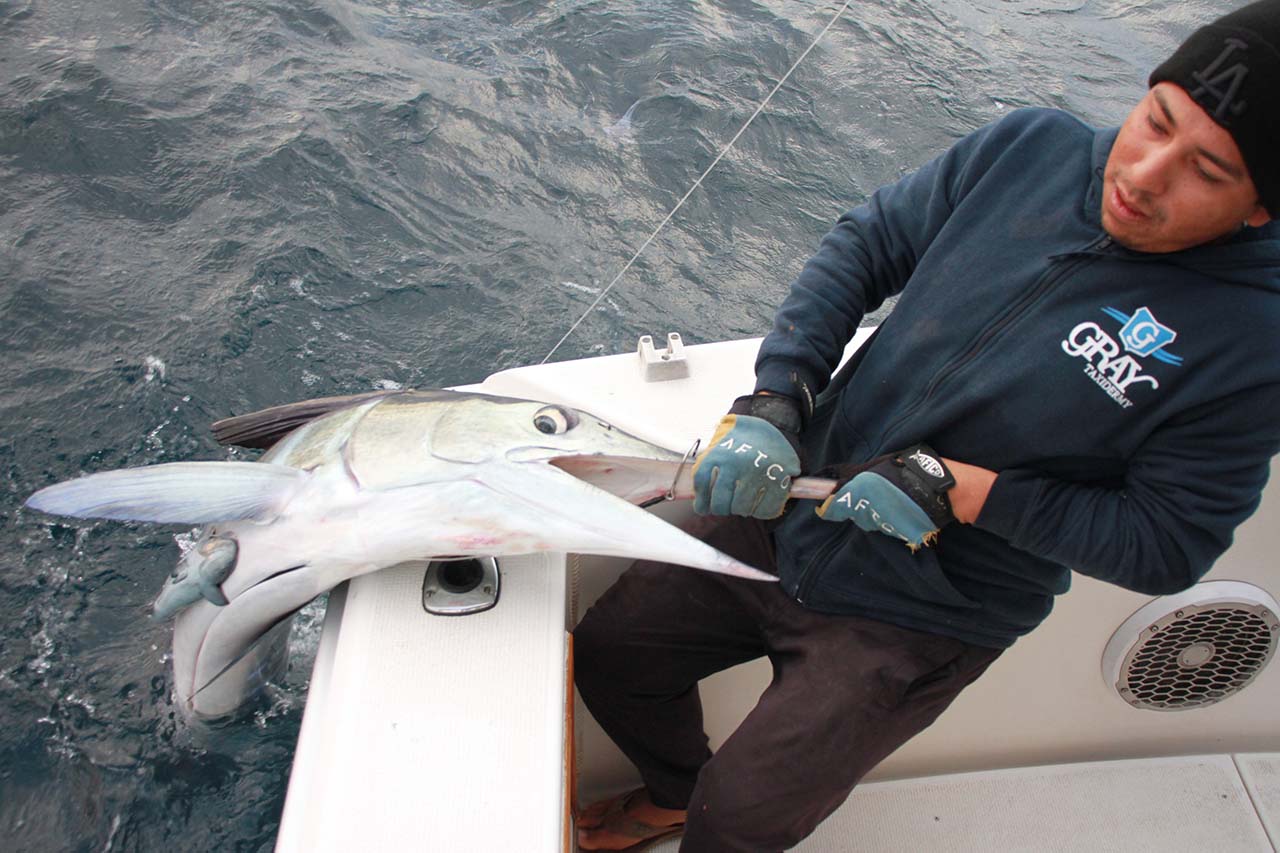
February presents some of the most consistent striped marlin action of the year. Sea conditions that are calm to moderate make it easier to troll a well-spaced teaser and bait spread without line tangles or excess drag.
Yellowfin Tuna
Tuna like temperature breaks and current lines, both of which are pronounced in February. The relatively stable sea state allows for smooth trolling speeds and accurate bait placement.
Wahoo
These speed demons respond well when the water is not too flat or too rough. Moderate swells in February keep baitfish moving, and wahoo follow.
Inshore Species (Snapper, Grouper, Roosterfish)
While not strictly offshore, these species are influenced by the same water patterns. Calm to moderate seas make it comfortable to fish near reef edges and rocky points during half-day trips.
The Role of Tides and Currents in February
Tides impact offshore fishing more than most anglers realize. In February:
- Winter tide amplitude (difference between high and low) is moderate
- Currents along the Pacific side can be steady but not extreme
- Current lines often develop where warmer Gulf waters meet cooler Pacific swells
These current lines act like invisible highways for baitfish. When bait schools up along these lines, predators follow. That’s where Blue Sky Cabo captains position the boat. They don’t just fish “in the general area.” They fish the edges of temperature breaks and current seams where game fish are most active.
What February Winds Mean for Fishing Days
Understanding wind patterns helps you know what to expect on the water:
- Offshore wind generally increases midday
- Onshore breezes may develop later in the day
- Winds tend to be lighter than spring or summer
This allows for comfortable early starts and productive offshore hours before winds affect surface conditions.
Blue Sky Cabo captains often schedule trips to take advantage of the calmest parts of the day, beginning early, locating fish while the seas are smooth, and returning before any wind-induced chop becomes uncomfortable.
Wave Height vs. Wave Period: A February Breakdown
Two factors define sea conditions: height and period.
- Wave height tells you how tall waves are
- Wave period tells you how far apart they are
In February, Cabo often sees long-period swells (10–12 seconds between waves). That means even if swells register 3–4 feet, the spacing makes them feel softer and more manageable than a short-period chop.
This is one reason February is considered one of the most comfortable offshore fishing months. Blue Sky Cabo vessels are engineered for exactly this kind of swell cutting through the longer waves with minimal bounce and less crew fatigue.
How Sea Conditions Affect Bite Windows
Sea conditions and fish behavior are deeply connected. Calm seas don’t always equal good fishing, and rough seas don’t always equal bad fishing. What matters more is:
- Water temperature shifts
- Current lines
- Bait movement
- Wind timing
In February, stable sea conditions often lead to predictable bite windows. That’s why Blue Sky Cabo captains pay close attention to:
- Water temp readouts
- Bird activity
- Surface baitfish movement
- Sonar signals for schools
When those elements align often in the morning and late afternoon, fishing success tends to spike.
Safety, Comfort, and Confidence on the Water
The sea conditions in February moderate swells, manageable winds, and cooler water temperatures create an environment where anglers can focus on the fishing rather than sea sickness or discomfort. While every person’s tolerance is different, many anglers find February’s offshore conditions some of the most enjoyable of the year.
Blue Sky Cabo’s fleet is built for stability and comfort:
- 32-foot Luhrs “Blue Star” – Perfect for nearshore and light offshore conditions
- 35-foot Riviera “Blue Water” – A blend of performance and comfort
- 43-foot Riviera “Blue Sky” – Ideal for deeper water and extended trips
- 60-foot Bertram “Blue Sea” – Premium comfort, power, and offshore capability
Each vessel is selected and prepared to handle the swells typical of February, keeping anglers confident from departure to return.
How Forecasting Helps Plan February Trips
Before departure, Blue Sky Cabo captains monitor:
- National weather service marine forecasts
- Local wind charts
- Real-time sea surface temperature
- Swell direction and period models
This allows them to refine where they fish and when, sometimes altering departure times by minutes to take advantage of calmer windows.
Common Misconceptions About Cabo Sea Conditions in February
Myth #1 — “February is Too Rough”
Fact: Compared to December and January swells, February swells often become longer and more predictable, which feels easier to fish in.
Myth #2 — “It Gets Windy Every Day”
Fact: February winds are typically lighter and more predictable than spring thermal patterns.
Myth #3 — “Fish Don’t Bite in Cooler Water”
Fact: Many offshore species like striped marlin and yellowfin tuna prefer the temperatures common in February.
Blue Sky Cabo captains use these truths daily to fine-tune where and how they fish, turning what sounds like “rough conditions” into productive fishing windows.
Half-Day vs Full-Day Trips and Sea Conditions
With offshore conditions in February generally calm:
- Half-day trips excel for inshore species and early morning offshore opportunities
- Full-day trips allow crews to follow bait and current lines farther offshore
Blue Sky Cabo offers both options, and the decision often depends on your group’s goals and tolerance for hours on the water.
Sea Conditions and Specific Species Behavior
Striped Marlin
Marlin tend to follow bait up and down current seams. February’s stable sea conditions make it easier to maintain a consistent teaser spread and hold fish longer near the boat.
Yellowfin Tuna
Tuna schools respond to subtle temperature breaks. The less chaotic sea state in February helps them maintain tight schools perfect for targeted trolling or vertical jigging.
Wahoo
These speedsters love slightly cooler offshore water. The moderate swell patterns in February keep bait moving and wahoo active.
The Bigger Picture: Long-Term Sea Condition Patterns
While weather changes day to day, February holds some predictable patterns that experienced captains rely on:
- Cooler offshore temperatures create strong but navigable thermoclines
- Swell directions shift toward longer periods
- Winds move offshore or remain light until late afternoon
Combining this knowledge with daily observation is what separates average fishing trips from exceptional ones, exactly the approach Blue Sky Cabo brings to every charter.
Preparing Yourself for February Offshore Seas
To fully enjoy and fish these conditions:
- Dress in layers (air temperatures on the water can feel cool)
- Bring sunscreen and polarized sunglasses
- Stay hydrated
- Trust the crew when they choose where to fish
The comfort and safety of the vessel make all the difference, and Blue Sky Cabo’s boats are equipped with all the essentials from cushioned seating to safety gear to keep your focus on fishing.
Final Thoughts on Sea Conditions Around Cabo in February
So how are sea conditions around Cabo in February for offshore fishing? They’re balanced, predictable, and highly fishable, especially when guided by experienced captains who read the water daily. Moderate swells, manageable winds, clear but cool water, and predictable current lines create an environment that rewards anglers who come prepared and ready to adapt.
Pair these natural conditions with the expertise of Blue Sky Cabo Fishing and Tours, and you’re positioned for some of the most consistent offshore fishing Cabo has to offer. Whether you’re chasing striped marlin, dogging tuna schools, or simply savoring the ride with family, February’s sea conditions set the stage for unforgettable days on the water.
Ready to Book Your February Adventure?
- Reserve your trip: Blue Sky Cabo
- Read real reviews: Blue Sky Cabo Fishing and Tours
- See daily updates: Blue Sky Cabo
- Watch Cabo fishing action: Blue Sky Cabo
With sea conditions working for you in February, and a crew that knows how to turn those conditions into action, your next Cabo fishing story starts here.
