
USA Cell / WhatsApp: +1.480.635.2965
YouTube Shorts: Blue Sky Cabo Shorts
F Dock, Centro, Marina, 23450 Cabo San Lucas, B.C.S., Mexico
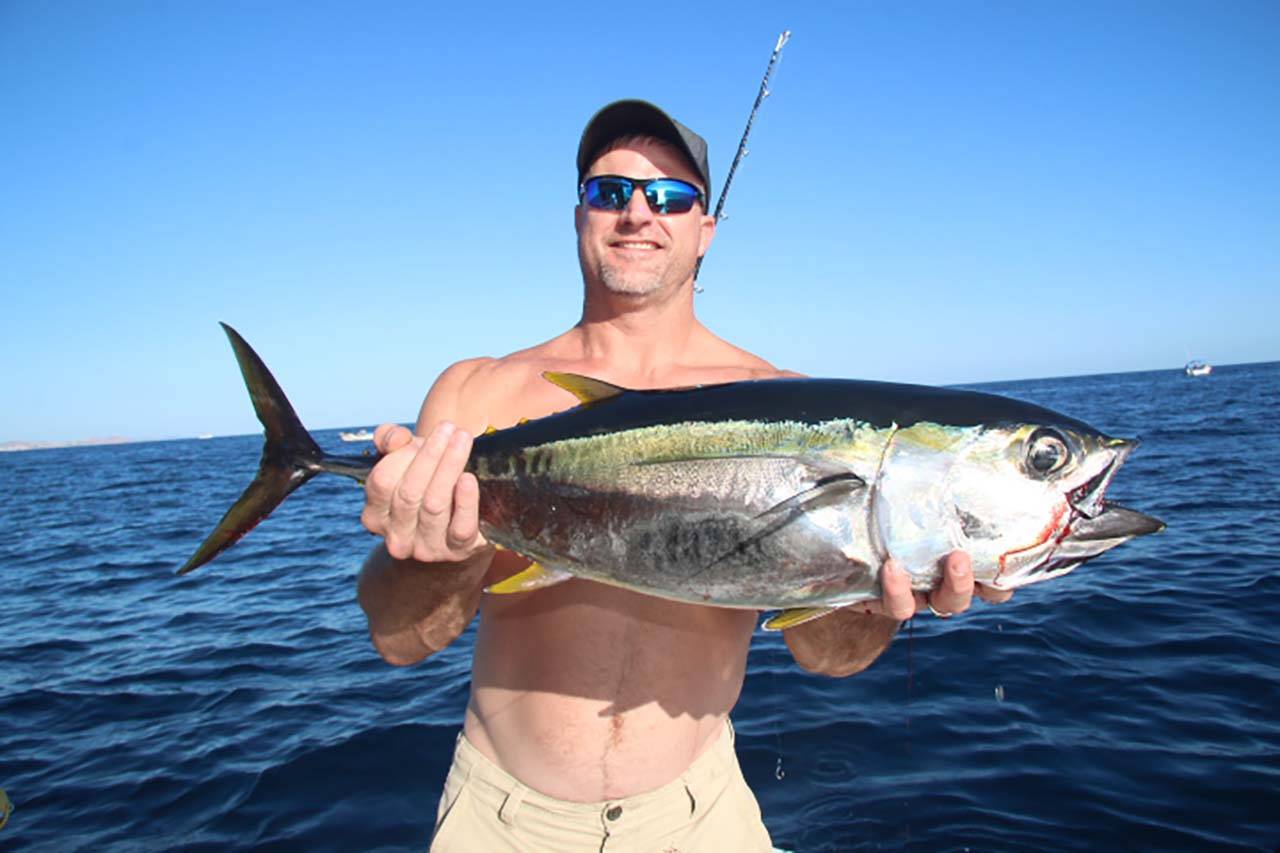
Cabo yellowfin tuna fishing in September can provide some of the most exciting offshore action of the warm-water season, particularly for anglers who enjoy powerful fish, long runs, demanding fights, and the anticipation of never knowing exactly what size tuna may be waiting beyond the horizon. For fishermen planning a Cabo fishing charter during September, yellowfin tuna are an important target because the offshore environment can hold everything from smaller schooling fish to substantially larger tuna, while the same waters may also produce dorado, wahoo, sailfish, and marlin during the same trip.
The attraction of yellowfin tuna fishing in Cabo San Lucas is not simply the possibility of catching a large fish, because tuna fishing requires constant observation, accurate positioning, appropriate tackle, and the ability to adjust techniques when the fish change their behavior. September can provide productive warm-water conditions, but the exact location and size of the tuna can vary considerably according to bait movement, currents, water temperature, water color, offshore structure, and weather.
For anglers who want a serious offshore experience, Cabo yellowfin tuna fishing in September provides an excellent opportunity to combine traditional fishing knowledge with modern equipment and flexible techniques. The most successful approach is rarely based on one fixed location or one presentation, because experienced crews understand that tuna can move quickly when their food source changes.
Why Cabo Fishing in September Is Important for Yellowfin Tuna
Cabo fishing during September occurs during a warm-water period when yellowfin tuna can become an important part of the offshore fishery. The combination of warm water and concentrated bait can attract tuna into areas where current, structure, and forage create favorable feeding conditions. For anglers specifically interested in yellowfin tuna fishing, September can be particularly attractive because it sits within the broader warm-water tuna season and can provide opportunities for both schooling tuna and larger fish. The size of tuna encountered on any particular day should never be guaranteed, however, because tuna are constantly moving and the available fish can change from one fishing ground to another. A knowledgeable Cabo charter therefore approaches September with a flexible strategy.
The crew may begin the morning searching for signs of tuna activity and then alter the plan once they identify where bait and predators are concentrated. Birds working over bait, surface feeding, temperature changes, current edges, porpoise activity, floating debris, and other signs can all provide valuable clues. The objective is to find the fish rather than simply travel to a location because it produced tuna previously.
That distinction is important for anyone researching Cabo San Lucas fishing, because local fishing conditions can change far more quickly than a calendar suggests.
How Cabo Fishing in September Locates Yellowfin Tuna
- Finding yellowfin tuna is one of the most important parts of a successful Cabo fishing charter, because even excellent tackle and experienced anglers cannot catch tuna that have not been located.
- The captain and mate constantly watch the water for signs that indicate feeding activity. Large concentrations of birds can sometimes reveal bait near the surface, while scattered birds may indicate that predators are feeding more selectively. Changes in water color and temperature can also help identify areas worth investigating.
- Offshore structure can become important because underwater banks and current zones can influence the movement of baitfish. When forage becomes concentrated, yellowfin tuna may follow those bait sources into the area.
- The captain therefore has several pieces of information to evaluate before deciding where to spend the next portion of the fishing day.
- Electronics can assist with identifying depth and structure, while visual observation provides information that cannot always be obtained from equipment alone. Experienced captains learn to combine these observations rather than relying on a single indicator.
- This is one reason private Cabo fishing provides an advantage for anglers who want a focused tuna experience, because the crew can concentrate on the group’s fishing priorities and adapt as the conditions develop.
What Cabo Fishing in September Feels Like When Tuna Are Found
- The atmosphere aboard a Cabo fishing charter can change dramatically once the crew identifies active yellowfin tuna.
- The rods may be prepared according to the size of fish being encountered, the bait presentation can be adjusted, and the captain may position the boat to keep the anglers in the most productive part of the activity.
- Yellowfin tuna are powerful fish, and even when they are not exceptionally large, they can produce strong runs that test an angler’s ability to maintain pressure while gaining line efficiently.
- When several fish are feeding together, the action can become particularly exciting because more than one angler may have an opportunity at the same time.
- The mate’s role becomes important during these situations because lines must remain organized, anglers need assistance, and the crew must prevent unnecessary tangles while the captain manages the boat.
- For an experienced tuna fisherman, this coordinated activity is part of the attraction.
- For someone catching a yellowfin for the first time, it can provide an entirely new understanding of how much power a tuna can generate beneath the surface.
How Cabo Fishing in September Uses Live Bait for Yellowfin Tuna
- Live bait can be an important component of yellowfin tuna fishing when the fish are feeding selectively or when the crew wants to present something that closely matches the natural forage available in the area.
- The type and size of bait available can influence how the crew approaches the tuna. When the natural food source is small, a presentation that appears unnatural may be ignored, while a properly presented live bait can encourage a feeding response.
- The captain and mate therefore need to understand not only where the tuna are located but also what the fish are feeding on.
- Bait presentation can involve careful hook placement, appropriate leader selection, and controlled positioning around the feeding activity.
- The angler also needs to be prepared to respond quickly because tuna can take a bait aggressively and immediately begin moving away from the boat.
- A successful Cabo charter crew understands that the presentation is only one part of the process, because boat position, current direction, bait behavior, and the tuna’s feeding pattern can all affect the outcome.
Why Cabo Fishing in September Can Make Trolling Effective
- Trolling provides another valuable tool for Cabo yellowfin tuna fishing, particularly when the fish are spread over a wider area or when the crew is searching for active schools.
- A properly arranged trolling spread allows the boat to cover water while presenting multiple lures or baits at different distances and angles behind the boat.
- The crew can adjust lure selection, trolling speed, line position, and spread configuration according to the species being targeted and the conditions being encountered.
- When yellowfin tuna are active, a strike can happen quickly, and the angler needs to be ready to respond while the mate clears other lines and the captain manages the boat.
- Trolling can also help identify where fish are traveling, allowing the captain to determine whether the tuna are associated with a particular current edge, structure area, bait concentration, or other offshore feature.
- For anglers who want to experience Cabo fishing rather than simply sit over one spot, trolling provides an active method of searching for opportunities.
Cabo Fishing in September Can Require Different Tuna Techniques
- One of the most important characteristics of yellowfin tuna fishing is that the fish do not always respond to the same technique.
- Tuna may be aggressive one morning and selective later in the day, which means the crew must be prepared to change presentations.
- Live bait, trolling, surface presentations, and other techniques can each become useful under different circumstances.
- The crew’s objective is not to demonstrate one particular fishing technique but to determine what the fish are responding to.
- This is especially important during September fishing in Cabo, when changing conditions can influence tuna behavior throughout the day.
- A morning bite may develop around one type of bait while later activity may occur deeper or in a different area.
- The ability to recognize these changes can be more valuable than simply carrying a large selection of tackle.
Cabo Fishing in September and the Importance of Tuna Tackle
- Yellowfin tuna require equipment capable of handling their speed and strength, but the tackle must also be matched to the approximate size of fish being pursued.
- Using equipment that is too light can create unnecessary difficulties during a powerful fight, while excessively heavy tackle can reduce the effectiveness of certain presentations when tuna become cautious.
- The crew therefore needs to consider rod strength, reel capacity, line, leader, hooks, drag settings, and bait presentation as part of one overall system.
- For anglers accustomed to freshwater or smaller coastal species, the difference can be substantial.
- A yellowfin tuna can change direction quickly and make long runs, which means the angler must maintain steady pressure without allowing excessive slack to develop.
- The captain can assist by positioning the boat to improve the line angle and reduce the amount of unnecessary pressure placed on the tackle.
- This teamwork is an important part of professional Cabo San Lucas fishing.
Cabo Fishing in September Tuna Planning Guide
| Yellowfin Tuna Factor | September Fishing Consideration | Why It Matters |
| Water Conditions | Warm offshore water can support active pelagic fish | Temperature and water movement influence where bait and tuna concentrate |
| Bait Activity | Bait concentrations can attract feeding yellowfin | Finding the food source can help locate predators |
| Bird Activity | Working birds may reveal surface feeding | Birds can provide visual clues from a considerable distance |
| Fishing Technique | Live bait and trolling can both be useful | Tuna behavior determines which presentation is most effective |
| Tackle Selection | Equipment should match the size of tuna being targeted | Proper tackle improves control during powerful runs |
| Boat Positioning | Captain may reposition according to current and fish movement | Position can affect bait presentation and line angle |
| Trip Flexibility | Conditions can change during the day | A flexible strategy allows the crew to follow the best opportunity |
| Weather Awareness | September requires attention to changing tropical conditions | Offshore safety must always come before reaching a specific fishing area |
This informational fishing grid is intended as a planning reference rather than a catch prediction. Actual yellowfin tuna availability, size, location, and behavior can change from one day to the next, which is why an experienced Cabo fishing charter should remain flexible throughout the trip.
Where Cabo Fishing in September Can Find Yellowfin Tuna
- Several offshore areas around Cabo San Lucas are associated with tuna fishing, including banks and structure where currents and bait can create productive conditions.
- Gordo Banks, San Jaime Banks, the 1150 area, Golden Gate, and other offshore zones are familiar names to anglers who follow Cabo yellowfin tuna fishing, although the best area can change according to daily conditions.
- A fishing location should never be treated as a guaranteed tuna destination.
- The captain may begin with an area that appears promising based on recent information, but the crew should continue evaluating the water after reaching the grounds.
- If bait is absent, birds are inactive, and there are no other indications of tuna, moving to another area may be the better decision.
- Conversely, if the crew finds concentrated bait and signs of predators, staying in that area can make more sense than continuing to travel.
- This is why local experience is so valuable when planning Cabo fishing in September.
Why Cabo Fishing in September Benefits from a Private Charter
- A private Cabo fishing charter provides flexibility that can be particularly valuable when targeting yellowfin tuna.
- The group does not have to follow the priorities of unrelated passengers, allowing the captain to focus on the fishing objectives discussed before departure.
- If yellowfin tuna are the primary target, the crew can organize the day around locating and pursuing them.
- If conditions change and another opportunity develops, the group can decide whether to take advantage of it.
- This flexibility can make the trip more enjoyable for anglers who have traveled specifically to pursue tuna.
- Blue Sky Cabo operates a private fleet that includes the 32-foot Luhrs Blue Star, 35-foot Riviera Blue Water, 43-foot Riviera Blue Sky, 50-foot Viking Blue Ocean, and 60-foot Bertram Blue Sea.
- The range of boats allows groups to select an option based on party size, desired comfort, fishing objectives, and trip length.
Cabo Fishing in September and the Role of the Captain
- The captain’s role in yellowfin tuna fishing extends far beyond operating the boat.
- A good captain continually evaluates the offshore environment, compares current observations with seasonal knowledge, and makes decisions about where to search next.
- When tuna are located, the captain must also position the boat appropriately.
- The direction of the current, wind, bait movement, and fish behavior can influence how the boat should approach the feeding area.
- During a fight, boat positioning becomes even more important because a powerful tuna can change direction and create unfavorable line angles.
- The captain may need to move forward, turn, or reposition the boat to help the angler maintain control.
- That coordination between captain and fisherman is one of the defining characteristics of professional Cabo San Lucas fishing.
Cabo Fishing in September and the Advantage of Flexible Techniques
- The best yellowfin Cabo tuna fishing strategy can depend on the behavior of the fish.
- If tuna are aggressively feeding near the surface, a surface-oriented presentation may be appropriate. If they are deeper or more selective, the crew may need to modify the presentation.
- Live bait can become important when tuna are keyed into natural forage, while trolling can help locate fish and cover additional water.
- The crew may also adjust leader strength and hook size when tuna become cautious.
- These decisions require experience because every change involves a balance between presenting bait naturally and maintaining enough tackle strength to control the fish.
- For the angler, the most important quality is patience.
- A tuna trip can include periods of searching followed by sudden periods of intense action, and remaining prepared throughout the day is part of the experience.
Why Cabo Fishing in September Can Be Ideal for Serious Tuna Anglers
- For anglers who have always wanted to experience yellowfin tuna fishing, September offers a compelling combination of warm water, offshore bait activity, and the possibility of encountering different grades of fish.
- The month is also attractive because tuna are not necessarily the only opportunity available.
- An angler may spend part of the day targeting yellowfin and still encounter dorado, wahoo, or billfish while moving between fishing areas.
- That diversity makes Cabo San Lucas fishing different from a narrowly focused tuna destination where the entire trip depends on one species.
- At the same time, serious tuna anglers can remain focused on the yellowfin objective when conditions justify it.
- The captain’s ability to read the water and adjust the fishing plan becomes especially important when the goal is to pursue larger tuna rather than simply catch any available fish.
Cabo Fishing in September and Weather Considerations
- September occurs during the Pacific hurricane season, so anglers should understand that weather awareness is an important part of planning any offshore Cabo fishing charter during this month.
- Warm-water conditions can be highly favorable for pelagic species, but tropical systems and changing offshore conditions can affect sea conditions and fishing plans.
- A responsible captain will always place safety ahead of reaching a particular tuna bank or fishing location.
- Anglers staying in Cabo San Lucas for several days may benefit from maintaining some flexibility in their vacation schedule when possible, especially when fishing is a major reason for the trip.
- The goal is to fish when conditions are appropriate rather than attempting to force an offshore trip into marginal conditions.
- That approach protects both the guests and the crew while preserving the quality of the fishing experience.
How Cabo Fishing in September Can Be Enhanced by Blue Sky Cabo
- Blue Sky Cabo provides private Cabo fishing charters aboard a fleet designed for different group sizes and offshore fishing objectives.
- Fishing licenses and live bait are included, while breakfast and an open bar are available as part of the charter service. Optional lunch can be added for groups that want additional onboard food service during a longer fishing day.
- The fleet’s range of boat sizes provides flexibility for groups seeking different levels of comfort and offshore capability.
- For anglers who want to incorporate specialized presentations into their fishing strategy, the optional Advantage Angler dredge provides another tool for the crew to use when conditions are appropriate.
- Photography and video services can also preserve the experience, which can be particularly valuable after an intense yellowfin tuna fight.
- The objective remains the same throughout the trip: provide a professionally operated Cabo fishing charter while allowing the captain and crew to adjust the strategy according to what the ocean is actually producing.
Why Cabo Fishing in September Is About More Than Catching Tuna
- Although the primary objective may be yellowfin tuna fishing, the overall Cabo San Lucas fishing experience involves much more than the final fish count.
- It includes watching the captain search for productive water, seeing birds working over bait, observing tuna feeding near the surface, feeling the first surge of a powerful fish, and working with the crew throughout the fight.
- The process is what makes offshore fishing memorable.
- Even anglers who have caught tuna in other destinations can appreciate the distinctive environment around Cabo San Lucas, where Pacific and Sea of Cortez influences create a dynamic offshore fishery.
- The possibility of encountering several additional game fish makes the experience even more interesting.
- A tuna-focused trip can therefore become a broader Cabo sportfishing adventure without losing its primary objective.
Cabo Fishing in September Makes Yellowfin Tuna the Main Event
Cabo yellowfin tuna fishing in September can provide exactly the type of offshore challenge that serious anglers seek when visiting Cabo San Lucas.
The combination of warm water, moving bait, offshore structure, changing currents, and pelagic predators creates an environment where a fishing day can develop in many different ways.
- Yellowfin tuna may be the primary objective, but the possibility of encountering dorado, wahoo, marlin, and sailfish provides additional excitement throughout the trip.
- The most important consideration is choosing a Cabo fishing charter capable of adapting to the conditions rather than relying on a fixed plan.
- Blue Sky Cabo provides private boats, experienced crews, professional fishing equipment, live bait, fishing licenses, breakfast, and an open bar, along with optional services designed to make a full day offshore more comfortable and memorable.
- For the serious tuna angler, however, the defining moment remains the bite.
- After hours of searching, watching birds, studying the water, adjusting the spread, and waiting for the right opportunity, a yellowfin can suddenly take the bait and turn the entire cockpit into a coordinated effort.
- The captain positions the boat, the mate manages the lines and tackle, and the angler settles into the fight.
A powerful yellowfin tuna can make repeated runs, change direction, and test every bit of preparation that went into the trip. That is what makes Cabo yellowfin tuna fishing in September so appealing. The experience is not simply about finding a fish; it is about finding the right conditions, recognizing the opportunity, responding correctly, and staying with the fish until the fight is finished. For anglers who want a serious tuna adventure in Cabo San Lucas, September deserves a place near the top of the fishing calendar. The month offers the warm-water environment yellowfin favor, the possibility of varied offshore action, and the opportunity to experience one of the most powerful game fish available to visiting anglers.
When the rod bends and the reel begins giving line, everything that happened before that moment suddenly makes sense. The search, the preparation, the changing strategy, and the patience all lead to the same objective: being ready when a Cabo yellowfin tuna finally decides to eat.
