
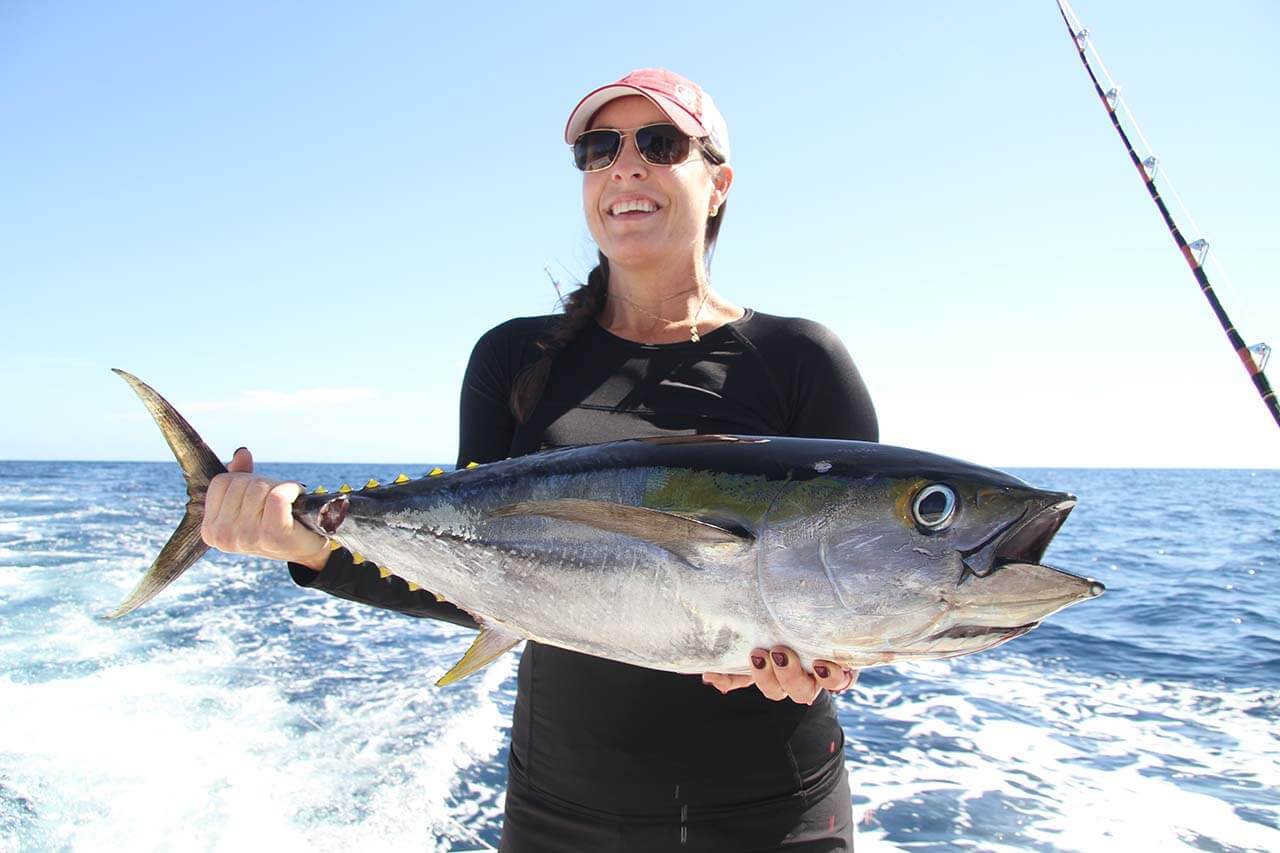
September is one of the most exciting months for tuna fishing in Cabo, particularly for anglers who are interested in yellowfin tuna and want the opportunity to encounter everything from smaller football-sized fish to genuinely large offshore tuna. The size of the tuna you can catch on a Cabo fishing charter during September can vary dramatically depending on where the fish are located, what they are feeding on, the water temperature, currents, bait concentrations, moon phase, recent weather and the techniques being used by the captain. Some September trips can produce plenty of smaller yellowfin in the 5-to-10-pound range, while other days can produce tuna weighing 20, 30, 40 or 50 pounds and occasionally much larger fish when the right conditions come together. For anglers specifically interested in trophy yellowfin, September is particularly attractive because Cabo’s late-summer and fall fishery can provide opportunities at substantially larger tuna than the average school fish. The important thing to understand is that tuna size in Cabo is never guaranteed, and the best strategy depends on whether your priority is catching a large number of tuna or spending more time searching for a much larger individual fish.
How Big Can Tuna Get on a September Cabo Fishing Charter?
When someone asks how big tuna can get during September fishing in Cabo, there is no single number that accurately describes the entire fishery because yellowfin tuna occur in a wide range of sizes and different schools can behave very differently from one another. One area may be holding smaller tuna that are aggressively feeding and providing nonstop action, while another area may contain fewer but substantially larger fish that require heavier tackle, different bait and considerably more patience. For an angler who simply wants to catch tuna, the smaller fish can provide an outstanding day because they are often aggressive and capable of producing repeated strikes. For an experienced tuna fisherman who has traveled to Cabo specifically looking for a trophy, however, those smaller schools may be less interesting than spending additional time searching for larger yellowfin.
During September, it is realistic to discuss tuna in several broad size categories, ranging from approximately 5-to-10-pound football fish through 20-to-50-pound quality yellowfin, with opportunities for substantially larger tuna when the offshore conditions and fish location cooperate. Cabo has a long-standing reputation for producing very large yellowfin, and September is part of the period when serious tuna anglers begin paying particular attention to the possibility of encountering trophy-class fish.
What Size Yellowfin Tuna Is Most Common During September Cabo Fishing?
The tuna that are most commonly encountered on a particular Cabo fishing charter can vary from year to year and even from one week to the next, so it is important not to confuse a seasonal possibility with an average catch. Smaller yellowfin in the 5-to-10-pound range can provide excellent action when large schools are feeding aggressively, and these fish are particularly popular with families and anglers who would rather have steady activity than spend several hours waiting for one trophy opportunity.
When larger tuna move into an area, however, the entire fishing strategy can change because the captain may decide that pursuing quality fish is more valuable than remaining with a school of smaller yellowfin. An angler who has specifically requested larger tuna should communicate that preference before leaving the dock, because the captain can then consider the appropriate tackle, bait and fishing areas instead of automatically following the strategy that produces the greatest number of smaller fish.
The difference between numbers fishing and trophy fishing is extremely important when discussing tuna size in Cabo.
Can You Catch 20 to 50 Pound Tuna in Cabo During September?
Yes, tuna in the 20-to-50-pound range are a realistic possibility during September, although the exact size and availability can change significantly according to location and conditions. These fish are large enough to provide an extremely serious fight, particularly for anglers who have previously caught only smaller yellowfin, and they represent an excellent middle ground for guests who want a substantial tuna without necessarily dedicating an entire charter to pursuing a true cow.
A 30- or 40-pound yellowfin can be a memorable fish, and the battle can become considerably more demanding once the tuna begins making long, powerful runs away from the boat. The captain and crew need to pay attention to drag settings, line angle, leader condition and boat positioning throughout the fight because larger tuna have the strength to expose weaknesses that may never become apparent when catching smaller fish. For this reason, if your goal is to catch a tuna in this size range, a private Cabo fishing charter provides a significant advantage because the fishing plan can be discussed around your preferred target rather than simply following whatever species is easiest to catch that morning.
Can You Catch 50 to 100 Pound Tuna on a Cabo Fishing Charter in September?
Absolutely, larger yellowfin are possible during September, although anglers should understand the difference between a legitimate opportunity and a guaranteed result. Tuna in the 50-to-100-pound range are powerful fish that require substantially more preparation than smaller school tuna, and targeting them successfully can require the captain to change tackle, bait presentation and even the area being fished.
A guest who tells the crew that the priority is simply catching tuna may be perfectly happy spending the morning catching smaller yellowfin, while an experienced angler who says, “I would rather catch one 75-pound tuna than twenty smaller fish,” is communicating an entirely different objective. That preference can influence how the captain approaches the day, because larger tuna may require more searching and a willingness to leave productive schools of smaller fish.
The possibility of a large yellowfin is one of the reasons September remains such an appealing month for serious Cabo tuna fishing.
Can You Catch 100 Pound Tuna in Cabo During September?
Yes, a 100-pound yellowfin is within the realm of possibility in Cabo during September, but it should be considered a trophy opportunity rather than something that should be treated as the expected catch on an ordinary trip. When larger tuna are located, the equipment and strategy can become significantly more specialized because a fish of this size can generate tremendous pressure on every component of the system.
The angler must also be prepared physically because a large tuna is not simply a bigger version of a small yellowfin. Once hooked, a powerful tuna can make long runs, change direction and use its body strength to maintain pressure against the angler for an extended period, making technique and patience just as important as raw strength.
If you specifically want a 100-pound-class tuna, tell your Cabo fishing charter company well before the trip so the crew has an opportunity to prepare the appropriate equipment and discuss what type of fishing program gives you the best chance.
Can Cabo Produce 200 Pound or Larger Tuna in September?
Cabo has a documented history of producing extremely large yellowfin tuna, including fish well beyond 200 pounds, and September falls within the broader late-summer and fall period when serious tuna anglers may encounter trophy-class yellowfin. These exceptionally large fish should never be presented as a normal September catch because they are rare compared with the much more common smaller and medium-sized tuna, but their possibility is one of the reasons Cabo has such a strong reputation among dedicated tuna fishermen.
A 200-pound-class tuna changes the entire concept of a normal fishing trip because the objective becomes finding a specific class of fish rather than simply locating an active school. The captain may need to dedicate substantial time to searching, use specialized bait and equipment, and make decisions that prioritize the possibility of a trophy over the number of fish caught. For someone whose lifelong goal is catching a cow yellowfin, that is exactly the type of challenge that makes a September Cabo fishing charter worthwhile.
What Is Considered a Cow Tuna During Cabo Fishing?
In the world of yellowfin tuna fishing, the term cow tuna generally refers to a very large female yellowfin, commonly beginning around the 200-pound class, although terminology can vary somewhat among anglers and fisheries. A tuna of this size is an entirely different challenge from a football-sized yellowfin because the fish possesses extraordinary power and endurance and can place tremendous stress on the rod, reel, line, leader, hook and angler.
Trophy tuna fishing therefore requires considerably more preparation than ordinary school-tuna fishing, and the crew needs to know in advance that the guest is interested in pursuing this category of fish. Specialized tackle, appropriate leader material, strong knots, large-capacity reels and carefully managed drag pressure all become increasingly important as the size of the target increases.
September is an attractive time to pursue this type of fish, but the captain should always describe the opportunity honestly rather than suggesting that a cow tuna is guaranteed simply because the calendar says September.
What Is the Largest Tuna You Can Catch in Cabo in September?
There is no dependable maximum size that can be promised for a September Cabo fishing charter, because exceptionally large yellowfin have been recorded in the Cabo region and the fishery can occasionally produce extraordinary specimens. Historical Cabo tuna records include yellowfin weighing several hundred pounds, demonstrating that the potential for an exceptional fish is real, although these fish are extremely rare compared with the smaller tuna that make up much of the everyday action.
When anglers hear about a giant tuna record, they sometimes assume that the same type of fish should be expected on their vacation, but that is not how offshore fishing works. Records demonstrate what is possible under an exceptional combination of fish location, bait, ocean conditions, tackle and angler skill; they do not establish the average catch for every boat or every week.
The realistic approach is to recognize that September provides access to a wide range of tuna sizes, with the possibility of something genuinely extraordinary when the conditions line up.
Why Does Tuna Size Vary So Much During September Cabo Fishing?
Yellowfin tuna are constantly moving in response to bait, currents, water temperature and feeding opportunities, which means different areas can hold dramatically different size classes at the same time. One school may consist primarily of smaller fish that are aggressively feeding on sardines, while larger tuna may be holding farther offshore or around a different concentration of bait. This is why the captain’s ability to read the ocean is so important.
A productive tuna area is not necessarily a trophy-tuna area, and a location producing dozens of smaller fish may actually be less desirable for a guest whose objective is one large yellowfin. The captain has to weigh the probability of continued action against the possibility that moving will produce a larger opportunity.
That decision becomes particularly important on a private Cabo fishing charter, where the guests can communicate whether they value action, size or a combination of both.
Does Bait Affect the Size of Tuna You Catch in Cabo?
Bait can have a major influence on the size of tuna being targeted because different tuna schools may respond to different presentations. Smaller yellowfin can become extremely aggressive around live sardines, while larger tuna may require more selective bait presentations, heavier tackle or different techniques designed to attract a larger fish.
Depending on the conditions, the captain may use live sardines, dead bait, squid, larger live bait or artificial presentations, with the specific choice determined by what is available and what the tuna are feeding on at that time.
Some of the most important factors include:
- Available bait size
- Tuna size
- Water clarity
- Current
- Depth
- Recent feeding behavior
- Tackle requirements
- Time available on the charter
There is no magic bait that guarantees a large yellowfin, but matching the presentation to the fish being targeted can make an important difference.
Does Tackle Need to Change for Bigger Tuna on a Cabo Fishing Charter?
Yes, and this is one of the most important differences between ordinary tuna fishing and trophy tuna fishing. A rod and reel capable of comfortably handling a 5-to-10-pound yellowfin may not be appropriate when the objective becomes a 50-, 100- or 200-pound fish. As tuna size increases, the crew may need to adjust the entire system, including rod power, reel capacity, line strength, leader size, hook selection and drag settings. Boat handling also becomes more important because the captain may need to maneuver the boat to maintain a favorable angle and reduce the chance of the tuna using its strength to break the line.
For anglers specifically targeting large tuna, requesting specialized equipment before the Cabo fishing charter is one of the smartest things you can do.
Does Charter Length Affect the Size of Tuna You Can Catch in September?
Charter length can make a meaningful difference because a longer trip provides more time for the captain to search for the right fish rather than simply stopping at the first productive tuna school. A four-hour trip may favor nearby fishing grounds because travel time represents a significant percentage of the total charter, while a six- or eight-hour trip gives the crew greater freedom to travel farther and spend additional time searching.
This does not mean that an eight-hour Cabo fishing charter guarantees a larger tuna, because the fish ultimately determine the outcome. It does mean that the captain has more time to adapt, relocate and pursue a specific target. For a trophy tuna angler, additional fishing time can be particularly valuable because the objective may involve searching for one exceptional opportunity rather than maximizing the number of fish caught.
Is an Eight-Hour Cabo Fishing Charter Better for Trophy Tuna?
If your primary objective is a large yellowfin, I would generally recommend considering a longer private Cabo fishing charter because the additional time gives the captain greater strategic flexibility. The boat can travel farther, spend more time searching, experiment with different presentations and continue fishing when conditions suggest that the larger tuna opportunity is worth pursuing. A longer charter does not change the biology of the fish, and it cannot force a large tuna to bite, but it increases the amount of time available to put yourself in the right place with the right equipment.
For serious anglers, that additional opportunity can be more valuable than simply catching a large number of smaller tuna.
Does the Moon Phase Affect Tuna Fishing in Cabo in September?
The moon phase does not determine how large a tuna becomes, but it can influence feeding behavior, bait movement, current patterns and the timing of predator activity. Experienced captains consider the moon along with water temperature, currents, bait concentrations, wind and recent fishing results rather than treating the moon as a standalone predictor. This is particularly important when trying to locate larger tuna because the goal is not simply finding fish; it is finding fish that are actively feeding in an area where the captain can effectively present the appropriate bait or lure.
Moon phase is therefore another piece of the puzzle rather than a guarantee of a particular tuna size.
Does Water Temperature Affect Tuna Size in Cabo During September?
Water temperature can influence where tuna and their preferred bait are located, which indirectly affects the opportunity to encounter different size classes of fish. September is part of Cabo’s warm-water period, and these conditions can support substantial bait activity and a variety of offshore predators. However, the warmest water is not automatically where the biggest tuna will be.
The captain must look for combinations of temperature, current, bait and predator activity that indicate productive water. Temperature breaks can sometimes be especially interesting because changes in water conditions can concentrate bait and attract predators. The best Cabo fishing charter captains therefore consider water temperature as one piece of a much larger offshore picture.
Where Can You Find Larger Tuna During September Cabo Fishing?
- Larger yellowfin may be encountered around offshore banks, current edges, bait concentrations and other areas where predators can find abundant food. Cabo’s offshore fishing grounds include several well-known areas associated with tuna and other pelagic species, but the exact location of the best fish can change constantly.
- That is why simply asking for a specific named fishing spot is not always the best approach.
- The fish may not be there on your particular day.
- A good captain uses local knowledge while also responding to what the ocean is showing in real time, including birds, bait, current, water temperature, surface activity and information from the day’s fishing.
- The objective is not to visit a famous fishing location simply because it is famous; the objective is to locate active fish.
Are Smaller Tuna Worth Catching on a September Cabo Fishing Charter?
- Absolutely, especially for families, beginners and anglers who value consistent action. A school of 5-to-10-pound yellowfin can provide an exciting day because these fish are strong for their size, aggressive around bait and capable of producing repeated strikes when conditions are right.
- Smaller tuna can also be a valuable part of a mixed strategy. The group can enjoy active fishing while remaining open to the possibility of locating larger fish later in the trip.
- For many guests, catching several tuna is more enjoyable than spending the entire day searching for one trophy that may never appear.
- The important thing is to tell the captain what type of experience you want so the Cabo fishing charter can be planned accordingly.
What Is the Difference Between Numbers Fishing and Trophy Tuna Fishing in Cabo?
- Numbers fishing and trophy tuna fishing are fundamentally different approaches, even though both involve pursuing the same species. Numbers fishing prioritizes active schools and the greatest opportunity to catch multiple fish, while trophy fishing accepts that there may be fewer bites in exchange for a better opportunity at a substantially larger tuna.
- An angler who wants action might happily remain with a school of smaller yellowfin that are biting consistently, whereas a trophy hunter may ask the captain to leave those fish and continue searching for larger tuna.
- Neither approach is wrong.
- The mistake is assuming that both goals can always be accomplished simultaneously.
- A private Cabo fishing charter allows you to communicate your preference and gives the captain a better understanding of what success means to you.
What Tuna Size Is Best for Families Fishing in Cabo in September?
For many families, yellowfin in the 5-to-20-pound range can provide an excellent combination of excitement, manageable tackle and strong fighting ability. These fish can bend the rod dramatically without requiring the physical endurance that becomes necessary when fighting a very large tuna. Children and inexperienced anglers may enjoy catching several smaller yellowfin because the action keeps everyone involved, while experienced adults can still appreciate the strength of the fish.
If your group contains anglers with different expectations, a private Cabo fishing charter can sometimes create a flexible plan that provides action while remaining alert for opportunities at larger tuna.
What Tuna Size Should Serious Anglers Target in Cabo During September?
Serious tuna anglers should decide before the trip whether their priority is numbers, quality or a genuine trophy. If the goal is a quality fish rather than simply filling the cooler, tell the captain that you are willing to sacrifice some action in exchange for a larger opportunity. A reasonable quality-tuna objective might be fish in the 20-to-50-pound range, while anglers specifically chasing trophy yellowfin may want to prepare for the possibility of fish weighing 50, 100 or even 200 pounds or more. The larger the target, the more important preparation becomes.
The captain needs to know what you want, and the crew needs the appropriate tackle available before the opportunity arrives.
September Cabo Tuna Size Guide
| Tuna Size | Fishing Experience | General Approach |
| 5–10 lb | Excellent action fish | Live bait and lighter tackle |
| 10–20 lb | Strong sport fish | Live bait and mixed presentations |
| 20–30 lb | Quality yellowfin | Heavier tackle and selective bait |
| 30–50 lb | Large yellowfin | Specialized tackle and careful fighting |
| 50–100 lb | Trophy-class tuna | Heavy tackle and dedicated strategy |
| 100–200 lb | Cow-class opportunity | Specialized offshore equipment |
| 200+ lb | Giant yellowfin territory | Trophy-focused program |
| 300+ lb | Exceptional trophy | Rare and extraordinary opportunity |
This chart represents general tuna size categories rather than a guarantee of what any particular September fishing trip will produce.
Can You Target Tuna and Marlin on the Same Cabo Fishing Charter?
You can potentially encounter both tuna and marlin during the same September trip, but pursuing them seriously can require different locations, tackle and techniques. This creates an important strategic decision for anglers because spending several hours focused on marlin can reduce the amount of time available to search for larger tuna, while dedicating the day to tuna can mean giving up opportunities to pursue billfish. If marlin is your lifelong dream, you may not want to abandon the marlin program simply because a smaller tuna school becomes active.
If a trophy tuna is your priority, however, the captain may recommend remaining focused on tuna and using the appropriate equipment for that fishery. The two objectives can overlap, but they are not always identical fisheries.
What Should You Request Before Booking a Trophy Tuna Cabo Fishing Charter?
If you are traveling to Cabo specifically because you want a large yellowfin, discuss that objective before the trip rather than waiting until the boat is already offshore. The crew can then determine what equipment and fishing strategy are appropriate for the size of tuna you hope to encounter.
For a serious trophy program, you may want to discuss:
- Heavy tuna tackle
- Large-capacity reels
- Appropriate rods
- Heavy leader
- Strong hooks
- Live bait
- Squid or other suitable presentations
- Specialized bait techniques
- Longer charter duration
- Offshore fishing areas
The exact setup should always be determined by the captain and the conditions of the fishery at the time of your trip.
Is September One of the Best Months for Big Tuna Fishing in Cabo?
- September is certainly a month that serious Cabo San Lucas tuna anglers should consider when planning a Cabo fishing charter, particularly because it falls within the warm-water period when larger yellowfin can become an important target. The month can produce an interesting mixture of smaller school tuna, quality yellowfin and opportunities for substantially larger fish when the conditions are favorable.
- What makes September particularly appealing is not simply the possibility of catching tuna, but the range of sizes that can potentially be encountered.
- An angler can have an action-packed day catching smaller yellowfin or spend the day pursuing a much larger fish, depending on the conditions and the chosen strategy.
- That flexibility makes September an exciting month for tuna enthusiasts.
What Does Blue Sky Cabo Recommend for September Tuna Fishing?
At Blue Sky Cabo Fishing Charter and Tours, I recommend telling the crew exactly what you mean when you say you want to catch tuna. If your priority is nonstop action, the strategy can focus on locating active schools and keeping rods bent as much as possible. If your objective is a larger yellowfin, the captain can discuss whether conditions support a more selective approach and whether specialized tackle should be prepared before departure. For guests who specifically want a trophy tuna, I recommend considering a longer offshore Cabo fishing charter because additional time provides more opportunity to search for larger fish and adapt when conditions change.
September is exciting because the fishery can offer everything from football-sized yellowfin to legitimate trophy-class tuna, but no responsible captain should promise a specific tuna size before the boat leaves the dock.
What Is a Realistic Tuna Size to Expect When Fishing Cabo in September?
The most realistic expectation is to prepare for a wide range of tuna sizes rather than arriving in Cabo expecting every tuna to weigh 50 or 100 pounds. Smaller yellowfin can provide outstanding action, while quality fish in the 20-to-50-pound class can create memorable battles, and larger tuna become a genuine possibility when the right fish are located and the captain has the appropriate equipment and time available. If your dream is a giant yellowfin, communicate that goal before booking and be prepared for a fishing strategy that may prioritize quality over quantity. If you simply want to catch tuna with your family or friends, remaining flexible can produce a more enjoyable day because smaller fish can provide exceptional action.
Ultimately, September tuna fishing in Cabo is about opportunity rather than guarantees. The ocean determines where the fish are, the captain determines how to pursue them, and the angler determines what kind of experience matters most. Whether you are hoping for a handful of football tuna, a 30-pound yellowfin or the chance at a genuine cow, the right private Cabo fishing charter should begin with an honest conversation about your goals.
Blue Sky Cabo Fishing Charter and Tours
Cell: +1.480.635.2965
YouTube Shorts: Blue Sky Cabo
Dock: F Dock, Centro, Marina, 23450 Cabo San Lucas, B.C.S., Mexico
