
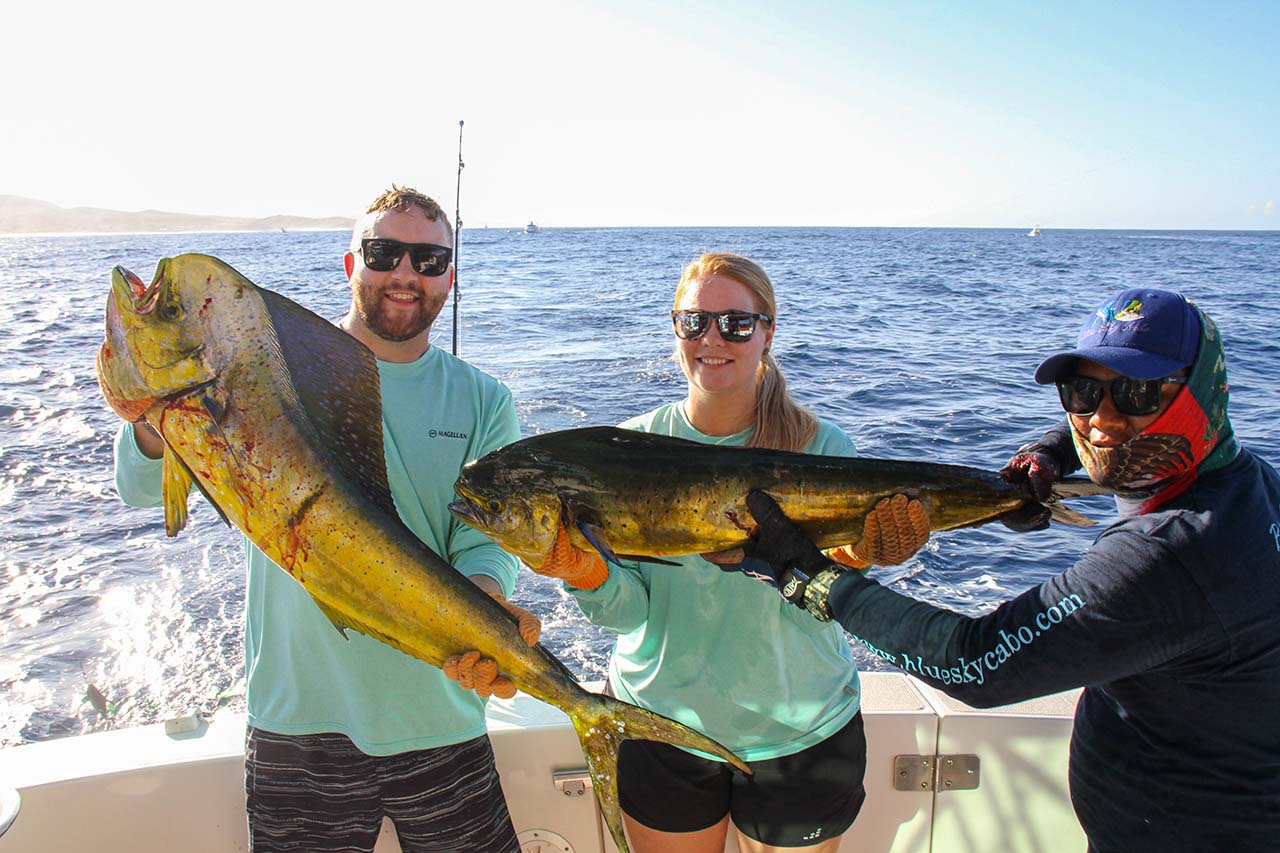
If you’re asking what is the prime mahi-mahi season in Cabo San Lucas, you’re zeroing in on one of the most exciting, fast-paced, and visually spectacular fisheries in Baja. Mahi-mahi commonly known as dorado are prized for their speed, aggression, vibrant colors, and outstanding table quality. But like all pelagic species, timing is everything. Unlike striped marlin, which can be found year-round, mahi-mahi are highly dependent on warm water, bait movement, and current lines. That means there is a clearly defined window when the fishery goes from occasional opportunity to full-blown action. Understanding what is the prime mahi-mahi season in Cabo San Lucas allows you to plan your trip for maximum numbers, larger fish, and consistent results.
From the first sight of floating debris offshore to the electric flash of green and gold behind a lure, mahi-mahi season in Cabo is as much about the experience as it is about the catch.
Understanding Mahi-Mahi Behavior in Cabo
To fully understand what is the prime mahi-mahi season in Cabo San Lucas, you need to understand how mahi-mahi behave.
Mahi-mahi are pelagic fish that thrive in warm, blue water, typically between 75°F and 82°F. They are highly migratory and are constantly searching for food, making them one of the most opportunistic predators in the ocean.
They are drawn to:
- Floating debris (logs, seaweed, trash)
- Current lines and temperature breaks
- Bait schools such as sardines and mackerel
- Offshore blue water zones
Unlike marlin that may relate to offshore banks, mahi-mahi are constantly moving and can appear almost anywhere conditions are right. This is why understanding what is the prime mahi-mahi season in Cabo San Lucas is critical because when those conditions align, they become widespread and aggressive.
Prime Mahi-Mahi Season in Cabo San Lucas
The direct and accurate answer to what is the prime mahi-mahi season in Cabo San Lucas is:
July through November (Prime Season)
August through October (Peak Window)
During this time, water temperatures rise into the optimal range, warm currents dominate, and bait becomes abundant. These factors combine to create a fishery where mahi-mahi are not only present but highly active.
This window is known for:
- High catch rates
- Larger fish sizes
- Multiple hookups
- Widespread offshore distribution
If your goal is consistent mahi-mahi action, this is the timeframe to target.
Seasonal Breakdown of Mahi-Mahi in Cabo
To better understand what is the prime mahi-mahi season in Cabo San Lucas, it helps to break the year into phases.
Water temperatures are cooler, typically below 72°F. Mahi-mahi are scarce, and most fishing focuses on striped marlin.
Early signs of mahi-mahi begin. Small numbers appear along warmer current edges, but they are not yet consistent.
Activity increases gradually. Fish become more common, but still not widespread.
The fishery accelerates. Warm water spreads across the region, and mahi-mahi become a regular catch.
This is the peak. Large numbers of mahi-mahi are present, including trophy-sized bulls.
Still strong, though numbers begin to taper toward the end of the month.
Cooling water reduces activity, and mahi-mahi become less predictable.
This progression clearly defines what is the prime mahi-mahi season in Cabo San Lucas and why late summer and early fall dominate.
Water Temperature and Mahi-Mahi Activity
Water temperature is the most important factor in determining what is the prime mahi-mahi season in Cabo San Lucas.
- Below 72°F → minimal mahi-mahi presence
- 73–75°F → early arrivals
- 76–82°F → peak activity
During peak months, warm water becomes widespread across Cabo’s offshore zones. This allows mahi-mahi to roam freely and feed aggressively. Temperature breaks still matter, especially during transitional months, but during peak season, the entire region can become productive.
Where to Find Mahi-Mahi in Cabo
Location is flexible during peak season, which is another reason anglers focus on what is the prime mahi-mahi season in Cabo San Lucas.
Mahi-mahi are commonly found:
- Along current lines
- Around floating debris
- In open blue water offshore
- Near bait concentrations
Floating debris is especially important. Even a small patch of seaweed can hold multiple fish. Because mahi-mahi are not tied to specific structure, they can be found across a wide range of offshore areas when conditions are right.
Size of Mahi-Mahi During Prime Season
Another major reason anglers ask what is the prime mahi-mahi season in Cabo San Lucas is size.
During peak months, mahi-mahi range from:
- 10–25 pounds (common)
- 25–40 pounds (strong fish)
- 40+ pounds (trophy bulls)
Larger fish are more common during September and October, when conditions are most stable.
Why Mahi-Mahi Are So Popular
Mahi-mahi are one of the most sought-after species in Cabo for several reasons.
They are:
- Extremely aggressive
- Fast and acrobatic
- Brightly colored
- Excellent table fare
This combination makes them both exciting to catch and rewarding to eat.
Techniques Used for Mahi-Mahi Fishing
Fishing techniques are highly effective during peak season.
Common methods include:
- Trolling small lures
- Casting to fish around debris
- Using live bait once fish are located
Mahi-mahi are opportunistic feeders, making them more accessible than some other pelagic species.
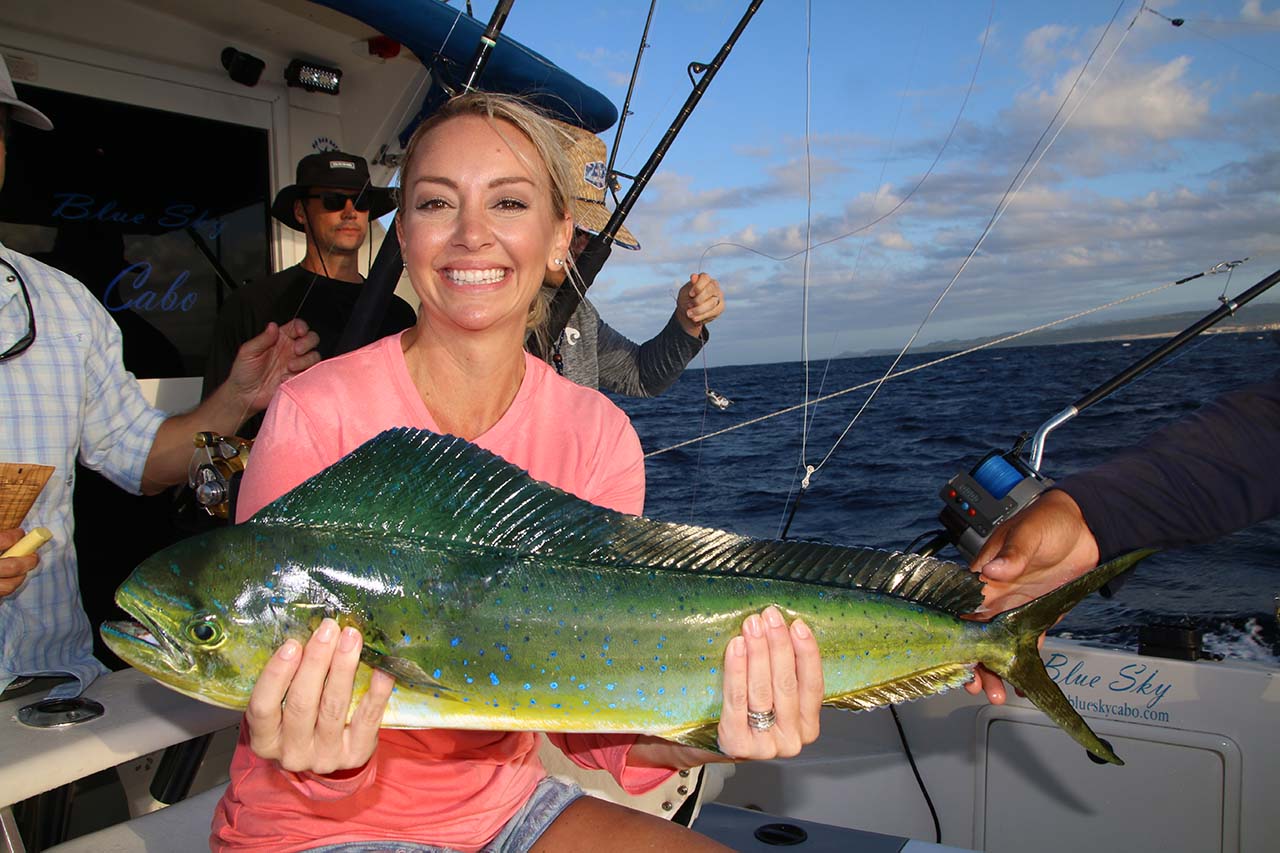
Blue Sky Cabo Fishing and Tours Advantage (15%)
When anglers plan around what is the prime mahi-mahi season in Cabo San Lucas, choosing the right charter is just as important as choosing the right month. Peak conditions create opportunity—but execution is what turns opportunity into results. Blue Sky Cabo Fishing and Tours operates with a system designed to maximize success specifically during peak mahi-mahi season. Their approach is built around adapting to the dynamic nature of dorado fishing, where fish move quickly and conditions shift throughout the day.
At the center of their strategy is the Blue Sky Cabo dredge program, which simulates a large bait school beneath the surface. While mahi-mahi are often found around debris and current lines, this system helps attract pelagic species into the spread, increasing visibility and strike opportunities.
The crew’s real advantage comes from how they read the water:
- Tracking temperature breaks and warm current edges
- Identifying floating debris zones
- Following bird activity that signals bait concentration
- Adjusting trolling patterns in real time
This allows them to locate mahi-mahi quickly and stay on active zones.
The overall experience is designed to match the quality of the fishing:
- All-inclusive charters with food, drinks, and licenses
- English-speaking, experienced crew
- Professional photography and video included
- Clean, well-maintained boats
- Complimentary float and anchor charter if no fish are caught
Guest reviews consistently highlight how this approach translates into results. Many describe multiple mahi-mahi caught in a single trip, along with a seamless, professional experience from start to finish. This combination of technique, adaptability, and service is why Blue Sky Cabo stands out during the prime mahi-mahi season.
Eating Mahi-Mahi in Cabo
One of the highlights of mahi-mahi fishing is enjoying your catch. Mahi-mahi is widely considered one of the best-eating fish in Cabo.
Popular preparations include:
- Grilled with garlic and butter
- Blackened with spices
- Coconut crusted
- Fresh ceviche
Restaurants near the marina can prepare your catch the same day, creating a true dock-to-table experience.
Reviews of Mahi-Mahi Fishing in Cabo
Anglers who fish during peak season often report:
- High catch rates
- Multiple hookups
- Fast-paced action
- Excellent eating quality
These consistent experiences reinforce why timing matters.
Best Time to Book for Mahi-Mahi Season
Because peak mahi-mahi season is well known, demand increases.
- Access to top crews
- Preferred dates
- Better overall experience
This is especially important during August through October. There is a unique energy to mahi-mahi fishing. The action is fast, visual, and unpredictable. Fish often appear suddenly, striking aggressively and lighting up with color as they fight. This creates a fishing experience that feels alive from start to finish.
Strategy for Targeting Mahi-Mahi
Success comes down to awareness.
Crews focus on:
- Floating debris
- Current lines
- Water temperature
- Bird activity
These elements guide every decision.
Plan Your Cabo Mahi-Mahi Fishing Trip
If you’re ready to experience mahi-mahi fishing at its best, planning ahead is essential.
- Website: Blue Sky Cabo
- TripAdvisor Reviews: Blue Sky Cabo Fishing and Tours
- Google Reviews: Blue Sky Cabo
- Facebook Page: Blue Sky Cabo
- YouTube Channel: Blue Sky Cabo
- YouTube Shorts & Reels: Blue Sky Cabo
- Cell / WhatsApp: +1.480.635.2965
The difference between a slow dorado trip and a high-energy, action-packed day offshore comes down to being in Cabo when the ocean is working in your favor. When warm currents settle in, bait stacks along current lines, and floating debris becomes abundant, mahi-mahi shift from scattered to aggressive and widespread. By aligning your trip with that window, you’re not just increasing your chances you’re stepping into the exact conditions that define Cabo’s reputation for fast-paced offshore fishing. That’s when the water feels alive, the strikes come quickly, and every pass through the spread holds real potential.
