
Cabo Fishing Report – Blue Sky Cabo Fishing Charters
September 13, 2026 – Six Marlin Released 12–15 Miles West of Cabo San Lucas
Date: Sunday, September 13, 2026
Boat: Blue Sky – 43′ Riviera
Captain: Luis
Guests: Robert and Alison
Charter Length: 10 Hours
Charter Time: 6:00 AM – 4:00 PM
Catch: 6 Marlin
Total Game Fish: 6
Released: 6 Marlin
Kept: 0
Fishing Location: Pacific side, approximately 12–15 miles west of Cabo San Lucas
Fishing Zone: Offshore water relatively close to the Pacific shoreline
Trip Type: Private Cabo marlin fishing charter
Primary Target: Marlin
Conservation: 100% marlin release
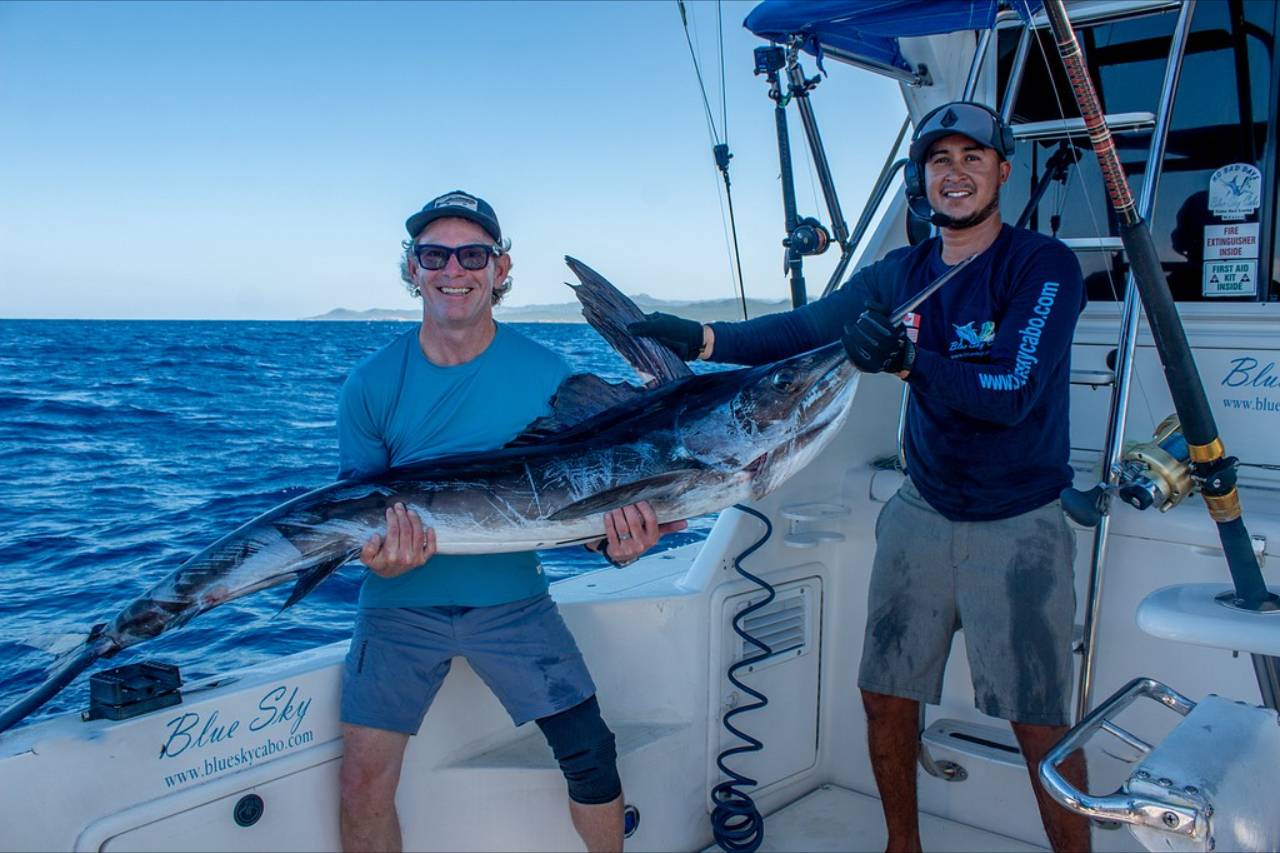
Some Cabo fishing reports are defined by one memorable fish, while others become part of the historical record because everything comes together in one productive stretch of water. September 13, 2026 was firmly in the second category, as Robert and Alison spent a full day on the Pacific and finished their charter with six marlin caught and six marlin successfully released.
Fishing aboard the 43-foot Riviera Blue Sky with Captain Luis, the group departed Cabo San Lucas for a 10-hour charter with plenty of time available to search the Pacific side and adjust the plan according to what the ocean was showing. The productive water did not require a long run toward distant banks or far-northern fishing grounds. Instead, the strongest marlin activity developed approximately 12 to 15 miles west of Cabo San Lucas, where offshore water relatively close to the Baja shoreline provided repeated opportunities throughout the day.
What made this trip particularly interesting was not simply the final number of marlin, although six successful releases certainly makes it an exceptional day. The more useful story for anglers researching Cabo fishing in September was how concentrated the billfish activity became once the right area was located. Rather than covering enormous distances in search of isolated fish, Captain Luis was able to continue working productive Pacific water where marlin were clearly present.
By the end of the charter, the fish box was empty of billfish, exactly as it should have been, while the fishing log showed one of the stronger marlin results of the month: six caught, six released and a 100-percent release rate.
An Exceptional Six-Marlin Day on the Pacific Side of Cabo
A single marlin can define an entire fishing trip, particularly for an angler experiencing Cabo San Lucas sportfishing for the first time, but a six-marlin day develops differently because each additional encounter provides the crew with more information about what is happening beneath the surface. The first successful hookup confirms that marlin are working the area, while another fish appearing in the spread begins to suggest that the initial encounter may not have been random. When the opportunities continue, an experienced crew starts looking beyond the individual fish and thinking about the larger pattern, including the movement of bait, direction of the current, water clarity and subtle changes that may be concentrating marine life within a relatively small section of ocean.
That was the important element of this September charter. The crew was not simply fortunate enough to cross paths with one isolated marlin before continuing across miles of empty water. There was enough billfish activity in the general fishing zone to justify staying with it, working the area carefully and allowing the day to develop rather than abandoning productive water in search of a famous offshore location.
Every marlin still represented an individual challenge because offshore fishing never becomes automatic, regardless of how good the conditions appear. A fish can approach aggressively and commit immediately, while another may follow the spread without ever producing a hookup. Even after several successful releases, the next opportunity still has to be created through proper boat positioning, an effective trolling presentation and the patience to continue searching.
Six completed catches therefore represent much more than one lucky moment. They represent a series of successful encounters spread across a full day of Cabo marlin fishing, with each fish eventually returning to the Pacific.
Productive Marlin Water Only 12 to 15 Miles West of Cabo San Lucas
The fishing location is one of the most useful details in this report because it demonstrates how quickly offshore conditions can change around the southern Baja Peninsula. On September 13, the productive marlin zone was approximately 12 to 15 miles west of Cabo San Lucas, placing the boat in genuine offshore fishing water without requiring an exceptionally long run from Cabo.
Visitors sometimes assume that deep sea fishing in Cabo San Lucas automatically requires traveling 30, 40 or even 50 miles offshore before serious pelagic fishing begins. There are certainly days when longer runs are necessary, particularly when favorable water, bait or targeted species have shifted farther from the marina, but Cabo’s geography frequently creates opportunities much closer to the coastline.
This particular trip is an excellent example. Warm Pacific water, available forage and active billfish came together within practical reach of Cabo, allowing the crew to spend a substantial portion of the charter actually fishing rather than committing several hours to travel.
The location also illustrates why a fishing report becomes much more valuable when it records more than the final catch. Knowing that six marlin were released is impressive, but knowing that those fish were encountered approximately 12 to 15 miles west of Cabo provides historical context that can be compared with other September fishing reports. Over time, those individual records help show how fishing moves around Cabo San Lucas from week to week and season to season.
Cabo Fishing Success Comes From Reading Conditions Rather Than Coordinates
Cabo San Lucas is surrounded by famous fishing grounds, and names such as Golden Gate Bank, San Jaime Bank, the 1150 Spot and Gordo Banks are familiar to anglers who have researched the region. These locations are important reference points, but none of them should be viewed as permanent addresses where fish wait for charter boats to arrive. The ocean is continuously changing, which means successful Cabo fishing often depends more on reading current conditions than running directly toward yesterday’s coordinates. Bait moves with currents and water temperature, predators follow the available food, productive color changes can shift, and a section of ocean that was full of life one day may look completely different the next morning.
For that reason, an experienced captain pays attention to much more than a GPS screen. Bird activity, baitfish, surface disturbances, current edges, floating structure, water color and other signs can influence the decision to continue searching, change direction or remain in an area that is beginning to produce.
The September 13 charter provides a clear example of why that approach matters. Once marlin activity was established west of Cabo, there was no practical reason to leave fish simply to reach a better-known destination on the chart. Productive water had already been found, and the repeated encounters demonstrated that staying in the general zone was the right decision. This is one of the fundamental differences between fishing a location and fishing the ocean. Coordinates provide a starting point, while conditions determine what happens next.
September Continues to Show Why Cabo Is a World-Class Marlin Destination
September is an interesting month in the Cabo San Lucas fishing calendar because the region remains under the influence of warm late-summer conditions while gradually moving toward the highly active fall sportfishing period. The variety of pelagic species that may be encountered can make this one of the more dynamic times of year for anglers willing to spend a full day offshore. Marlin naturally receive much of the attention because Cabo’s international fishing reputation is closely connected to billfish, although September can also offer opportunities for dorado, yellowfin tuna, wahoo and sailfish when conditions are favorable. The exact species mix changes constantly, which is why historical fishing reports are more useful than generalized claims about what anglers are guaranteed to catch during a particular month.
A seasonal calendar can identify possibilities, but an actual fishing report documents reality. On September 13, reality was dominated by marlin. The Pacific water west of Cabo held enough billfish activity to produce six successful catches during one charter, making this a significant data point for anyone studying September marlin fishing in Cabo San Lucas.
That does not mean another boat fishing the same area the following morning would automatically produce the same result, nor does it mean every September charter should expect multiple marlin. Offshore fishing is far too variable for that kind of promise. What the report does establish is that substantial marlin activity was present on this date and within a relatively accessible distance from Cabo.
Maintaining that distinction between possibility and guarantee is important because an honest fishing archive should record exceptional days without pretending that exceptional fishing is ordinary.
A Ten-Hour Cabo Fishing Charter Provides Valuable Flexibility
Robert and Alison selected a 10-hour fishing charter, and the additional time became an important part of how the day unfolded. Longer trips do not manufacture fish or guarantee a larger catch, but they provide something that can be extremely valuable in offshore fishing: flexibility. A captain working within a shorter charter has to consider the relationship between travel time and fishing time throughout the morning. If productive water is farther away than expected, every additional mile reduces the amount of time available to work the fishing grounds. If the bite begins developing later in the day, a shorter schedule can force the boat to leave just as conditions are improving. A 10-hour charter provides more room for those variables. The captain can investigate promising water, make a significant move if the original plan is not producing, or remain with an active bite without immediately worrying about the return schedule.
On this particular trip, the productive fishing happened within a reasonable distance of Cabo, which meant the longer charter did not have to be consumed by an extended run. Instead, the available time could be invested in continuing to fish a zone that was generating legitimate marlin opportunities. For anglers comparing a five-hour, six-hour, eight-hour or ten-hour Cabo fishing charter, the key consideration should therefore be opportunity rather than guarantees. More hours provide additional fishing time and strategic flexibility, particularly for guests whose priority is serious offshore fishing rather than simply spending a few hours on the water.
September 13 demonstrated exactly how valuable that flexibility can become when the crew finds an area worth working.
Multiple Marlin Encounters Require the Crew to Stay Focused
Looking at the final catch total can make a successful fishing day appear easier than it actually was. Six marlin on a report might suggest that the boat simply entered a productive area and spent the day hooking fish one after another, but offshore fishing rarely unfolds that neatly. Each marlin encounter begins independently. There may be quiet trolling time between fish, and not every marlin that appears behind the boat necessarily becomes a successful catch. Some billfish investigate a presentation before disappearing, while others arrive aggressively enough that the entire cockpit has to respond immediately.
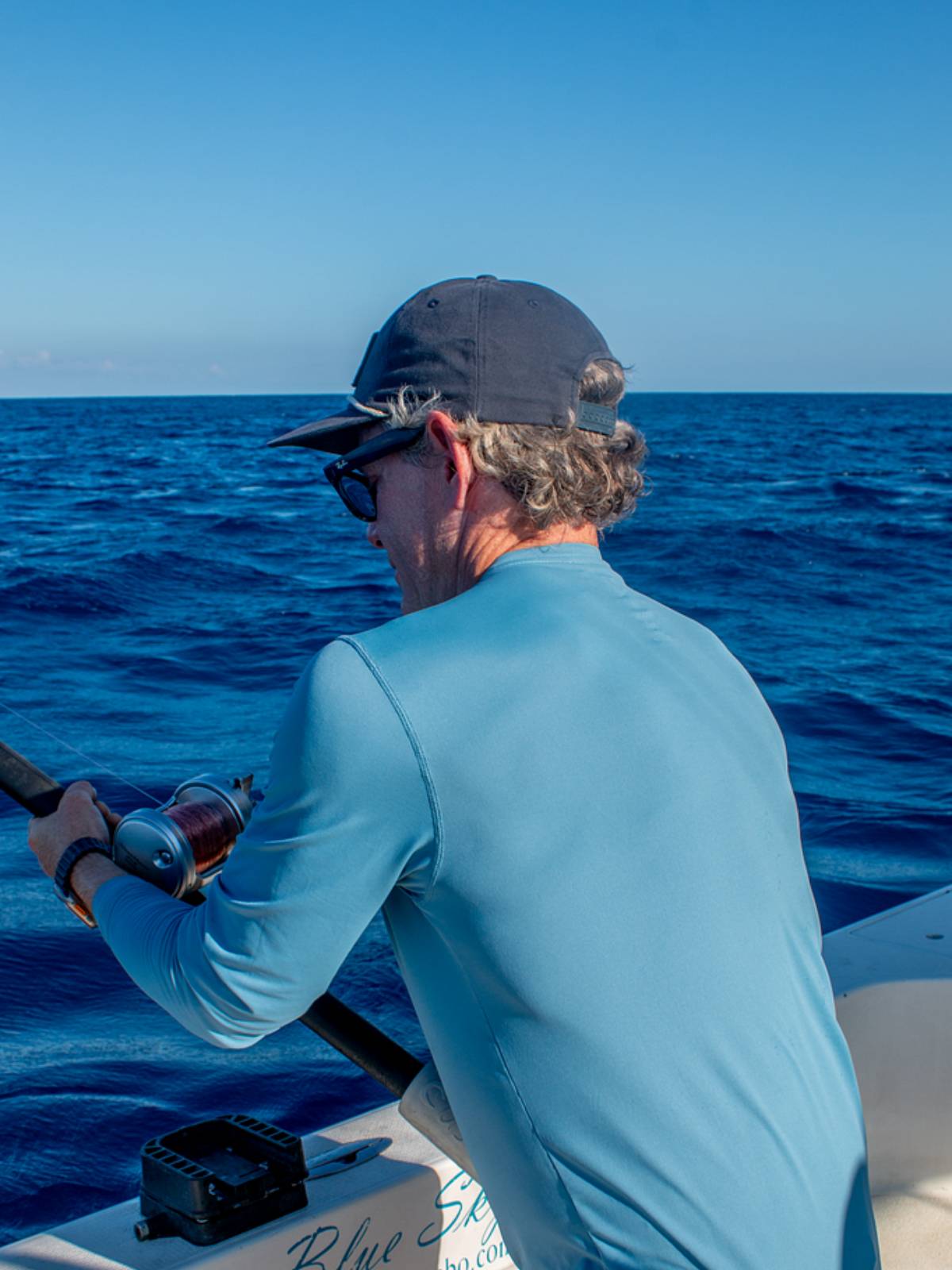
After a successful fight and release, the crew has to reorganize and return the spread to fishing condition. The captain works back toward the productive pattern, everyone resumes watching the water, and the process begins again without knowing whether the next encounter will happen quickly or require another extended search. This is why multiple-marlin fishing rewards concentration. After several successful catches, it would be easy to relax and consider the trip complete, but productive offshore conditions can change quickly. When billfish are present, every additional minute spent fishing effectively represents another opportunity.
The September 13 crew continued working rather than treating the first few marlin as the end of the story, and that persistence eventually turned an already successful trip into a six-release day.
Catch-and-Release Marlin Fishing Protects the Experience Cabo Is Famous For
Every marlin caught during this charter was released, continuing an important Blue Sky Cabo practice and reinforcing the role that responsible billfish handling plays in the future of Cabo sportfishing. For many anglers, the release has become one of the most rewarding parts of the entire marlin experience. The objective is to locate the fish, generate the strike, successfully complete the fight and then watch the billfish return to the ocean rather than seeing it hanging at the marina.
That philosophy is particularly relevant in Cabo San Lucas because marlin are deeply connected to the destination’s identity. Anglers travel from around the world specifically for the opportunity to experience billfish, and maintaining healthy populations is important to the long-term quality of the fishery. A successful release does not diminish the achievement of catching the fish. If anything, it completes the experience in a way that allows another angler, perhaps years later and hundreds of miles away, the possibility of encountering the same marlin.
On this trip, the conservation numbers matched the catch numbers perfectly: six marlin caught and six returned to the Pacific. For a Cabo marlin fishing charter, that is a result worth recording.
Historical Cabo Fishing Reports Give Future Anglers Better Information
One of the reasons Blue Sky Cabo continues building a detailed fishing-report archive is that individual trips become more valuable when they can be compared over several seasons. A single photograph proves that a fish was caught, but a properly documented fishing report explains when it happened, where the boat was fishing, how long the charter lasted, what species were encountered and whether those fish were released or retained. Over time, that information becomes a genuine historical resource. An angler researching Cabo fishing in September can review actual charter results rather than relying entirely on generalized seasonal descriptions. Someone interested specifically in marlin can compare where billfish were encountered during different weeks, while another visitor deciding how long to book can see how five-hour, eight-hour and ten-hour trips have performed under different conditions.
The September 13 charter adds an especially useful entry because the result was strong and the fishing location was clearly defined. Marlin were concentrated on the Pacific side approximately 12 to 15 miles west of Cabo, and the crew converted the available opportunities into six successful releases during a full-day charter. Those details will remain useful long after the photographs and social-media posts from the trip have disappeared from people’s feeds.
That is the difference between posting a catch and maintaining a fishing history.
The Pacific Side Can Produce Major Offshore Action Surprisingly Close to Cabo
Another important takeaway from this report is that distance from shore should never be confused with the quality of offshore fishing. The productive water was relatively close to the Baja coastline by blue-water fishing standards, yet the result was the kind of billfish action normally associated with a serious offshore adventure. Cabo’s geography helps make this possible. The southern Baja Peninsula provides access to deep water without requiring the lengthy runs found in some other sportfishing destinations, and shifting currents can bring favorable conditions, bait and predators into surprisingly accessible areas. When that happens, anglers benefit because a greater percentage of the charter can be spent actively fishing.
The opposite can also occur. Productive water may move farther offshore or north along the Pacific, requiring a longer run before the crew begins seeing the signs it wants. That constant movement is another reason fishing reports should identify the location of the catch rather than simply stating that fish were caught “in Cabo.” On September 13, the location mattered. The marlin were not scattered across a massive offshore area; enough activity was concentrated west of Cabo to keep the boat engaged within a productive zone.
For future anglers studying Cabo offshore fishing grounds, that information provides a much clearer picture of how dynamic the region can be.
Cabo Marlin Fishing Is About Opportunities, Not Guarantees
- Six marlin is an exceptional result, and it should be described that way without turning the report into a promise about what the next charter will produce.
- No responsible Cabo fishing company can control the ocean.
- A captain can select an area based on current information and experience, while the crew can prepare quality tackle and present the spread effectively. The charter can provide enough time to reach productive water and remain there when the bite develops. What nobody can control is whether a wild marlin decides to eat.
- That uncertainty is fundamental to sportfishing.
- It is also what makes a six-marlin day memorable.
- If every charter produced exactly the same number of fish, there would be little suspense and even less reason to remember a particular trip. Offshore fishing creates its strongest memories because the result is unknown when the boat leaves the marina.
- Robert and Alison began September 13 knowing they had a full day available to fish the Pacific. They returned after experiencing six successful billfish catches, a result that could never have been known in advance.
- Historical reports should preserve that reality rather than rewriting a great fishing day as though it were inevitable.
Why the Best Cabo Fishing Report Is More Than a Catch Number
- The final number will naturally receive most of the attention, but a useful fishing report should provide enough context for readers to understand why the result happened and what can reasonably be learned from it.
- In this case, the important information goes beyond six marlin.
- The trip took place in September during warm-water conditions. The crew fished the Pacific side rather than heading into the Sea of Cortez. The strongest action developed approximately 12 to 15 miles west of Cabo San Lucas. The guests had booked enough time to give the captain considerable flexibility, and once productive water was located, the crew continued working the area instead of abandoning it unnecessarily.
- Every marlin was released.
- Those details turn a catch number into a historical record.
- They also make the report useful for searchers looking for information about Cabo fishing conditions, Cabo marlin fishing, September fishing in Cabo, Cabo deep sea fishing charters and Pacific-side fishing near Cabo San Lucas without forcing those phrases unnaturally into every paragraph.
- The objective is not to repeat “Cabo fishing charter” dozens of times. The objective is to answer the questions real anglers are asking while accurately documenting what happened on the water.
Choosing a Cabo Fishing Charter Based on the Experience You Want
- Charter length should ultimately be matched to the type of fishing experience a guest wants rather than selected solely because a longer trip sounds better.
- A shorter charter can be ideal for visitors who want to combine fishing with other activities during their Cabo vacation, while a six-hour trip provides additional fishing time without requiring the entire day. Eight hours is a traditional choice for anglers who want a substantial offshore experience, and a 10-hour charter provides the greatest flexibility for guests who are comfortable dedicating most of the day to fishing.
- Serious marlin anglers often appreciate the longer format because billfish fishing can involve extended periods of searching followed by sudden action. When the bite begins developing, having additional time available can prevent the frustrating situation of leaving productive water because the charter is ending.
- That does not mean everyone should automatically book ten hours. It means guests should understand what they are buying when they add fishing time.
- They are buying flexibility and opportunity rather than a predetermined catch.
- On September 13, that opportunity developed into something exceptional.
Six Releases Become Part of the Blue Sky Cabo Fishing History
- Years from now, the most valuable part of this report will probably not be its description of the excitement onboard. The permanent value will be the basic historical record showing exactly what occurred off Cabo San Lucas during this particular September charter.
- A 43-foot Riviera left Cabo for a full fishing day with Captain Luis. Productive Pacific water was located approximately 12 to 15 miles west of the marina area. Marlin activity was strong enough to generate repeated encounters, and six fish were ultimately caught and released.
- That information can later be compared with other September reports to identify broader seasonal patterns without pretending that one trip represents an entire month.
- This is exactly why Blue Sky Cabo fishing reports should remain detailed while still being readable. Statistics provide the permanent record, while the narrative explains what made each charter different.
- There is no need to repeat the boat name throughout the article or continually remind readers that the trip lasted ten hours. Those facts have already been recorded.
- What deserves attention is what made September 13 unique.
- On this day, the Pacific west of Cabo produced an outstanding concentration of marlin, and the crew made the most of it.
Final Cabo Fishing Report Summary – Six Marlin Released West of Cabo San Lucas
September 13, 2026 will stand out in the Blue Sky Cabo fishing archive as an exceptional billfish day, with Robert and Alison experiencing six successful marlin catches during their full-day charter and every fish being released back into the Pacific. The location adds valuable context to the result because the strongest action was found approximately 12 to 15 miles west of Cabo San Lucas, relatively close to the Pacific shoreline rather than on a distant offshore bank. Once the productive zone was identified, the crew stayed with the developing bite and continued giving the guests opportunities rather than leaving active fish simply to search somewhere else.
For anglers researching September fishing in Cabo San Lucas, this trip demonstrates why actual fishing reports are so useful. They show what happened on a specific day without pretending that the same result can be guaranteed tomorrow. They also provide a growing historical record of species, fishing areas and seasonal patterns that can help visitors better understand the constantly changing Cabo fishery. For Robert and Alison, however, the historical data will probably be secondary to the experience itself. They went to the Pacific hoping for a memorable day of Cabo marlin fishing and returned after successfully catching and releasing six billfish within a single charter.
That is an outstanding fishing day by any measure, and it is exactly the kind of trip worth preserving in the Blue Sky Cabo fishing report archives.
Blue Sky Cabo Fishing and Tours
Cell / WhatsApp: +1.480.635.2965
F Dock, IGY Marina, Cabo San Lucas, B.C.S., Mexico
