
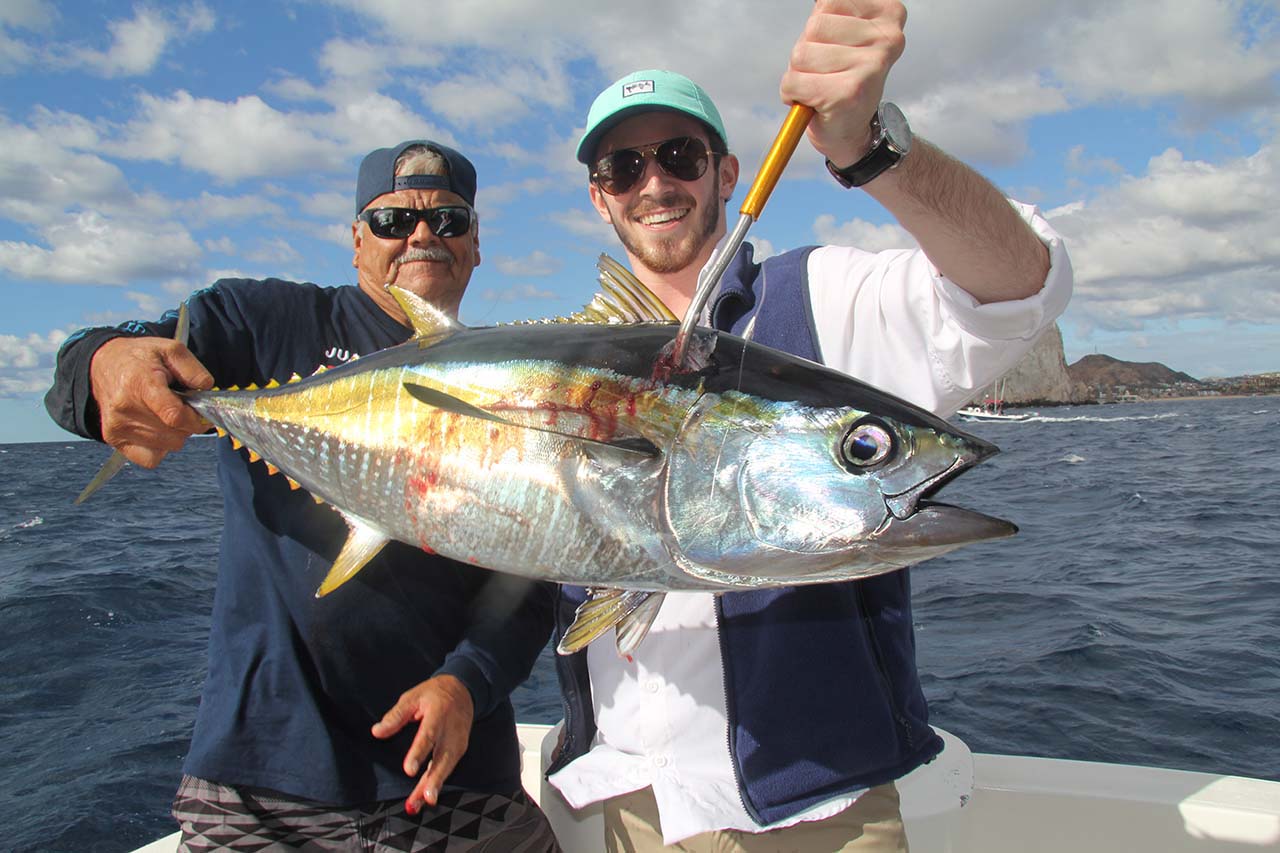
If there is one question that consistently appears among anglers planning a fishing trip to Baja California Sur, it is when is tuna season in Cabo? While Cabo San Lucas is often celebrated for marlin fishing, experienced captains know that tuna fishing can be every bit as exciting, especially when schools of yellowfin tuna begin feeding aggressively offshore. The answer to when is tuna season in Cabo? depends on the size of fish you are targeting, the fishing techniques you enjoy, and the specific offshore conditions present during your trip. Tuna can be caught throughout much of the year, but there are distinct periods when opportunities increase dramatically.
Unlike marlin, which often attract anglers because of their spectacular jumps and acrobatic fights, tuna are known for brute strength. They dive deep, pull relentlessly, and often create battles that leave anglers exhausted and smiling at the same time. Whether targeting football-sized tuna weighing 15 to 30 pounds or giant yellowfin capable of exceeding 200 pounds, Cabo offers opportunities that few destinations can match. The combination of warm water currents, abundant baitfish, and productive offshore banks creates an environment where tuna can thrive. These fish migrate through the region following food sources, creating seasonal peaks that anglers eagerly anticipate each year.
Understanding those seasonal patterns can dramatically improve your chances of success and help determine the ideal time to book your next offshore adventure.
Why Understanding When is Tuna Season in Cabo Starts with Understanding Yellowfin Tuna
Yellowfin tuna dominate Cabo’s tuna fishery. These powerful fish are among the most sought-after gamefish in the world because they combine speed, endurance, strength, and exceptional table quality. Their bright yellow fins and streamlined bodies make them instantly recognizable to anglers. Yellowfin tuna are highly migratory. They travel enormous distances while constantly searching for food and favorable water conditions. Because of this, their presence around Cabo changes throughout the year.
Several factors influence tuna movement:
- Water temperature
- Bait availability
- Ocean currents
- Seasonal weather patterns
- Offshore structure
When these factors align, Cabo can produce incredible tuna fishing that attracts anglers from around the globe. The challenge is understanding when those conditions are most likely to occur.
Why Cabo San Lucas Has Become One of the Best Tuna Fishing Destinations in the World
Cabo’s location provides a tremendous advantage. Situated at the southern tip of the Baja Peninsula, Cabo benefits from the interaction of Pacific Ocean currents and the Sea of Cortez ecosystem. These waters support massive populations of sardines, mackerel, flying fish, squid, and other forage species that tuna rely upon for survival.
Unlike many destinations where anglers must travel extreme distances offshore, Cabo often provides access to productive tuna grounds within reasonable running distances.
Some of the most productive tuna zones include:
- Gordo Banks
- The 1150 Area
- Jaime Bank
- Golden Gate Bank
- Vinorama
- Finger Bank
These offshore structures act as feeding stations where bait and predators gather throughout the year. When bait becomes concentrated around these locations, yellowfin tuna often follow. That relationship between bait and tuna is the foundation for answering when is tuna season in Cabo?
Why Spring Begins Building Toward Tuna Season in Cabo
While many anglers associate spring with striped marlin fishing, experienced captains begin monitoring tuna activity closely during this period. March, April, and May often represent a transition phase. Water temperatures gradually warm, bait concentrations increase, and offshore ecosystems become increasingly active. Smaller yellowfin tuna frequently begin appearing in greater numbers during spring. The fishing may not yet produce giant tuna consistently, but opportunities improve steadily as summer approaches.
One reason spring fishing remains attractive is variety. Anglers can target marlin, dorado, and tuna during the same trip, creating exciting mixed-species opportunities. As water temperatures continue rising, tuna activity typically follows the same upward trend.
Why Summer Signals the Start of Serious Tuna Season in Cabo
By June and July, tuna fishing begins attracting significant attention. Warmer water temperatures encourage larger schools of yellowfin tuna to move through productive offshore areas. Bait concentrations continue expanding, creating feeding opportunities that support growing tuna populations. Summer fishing often involves searching for signs of life offshore. Birds diving on bait schools, porpoise activity, breaking fish, and temperature changes all help captains locate feeding tuna. This is when many anglers begin asking when is tuna season in Cabo? because reports of increasing tuna activity start spreading throughout the fishing community. The excitement grows with every successful trip. Schools become larger. Fish become more aggressive. Opportunities continue improving.
For many crews, summer represents the beginning of the tuna fishing season they have been waiting for.
Why August is Often Considered the Beginning of Prime Tuna Season in Cabo
August is a month that generates excitement among tuna enthusiasts. The combination of warm water, stable offshore conditions, and expanding bait populations creates a highly productive environment for yellowfin tuna. Football-sized tuna are often abundant, providing constant action and fast-paced fishing. At the same time, larger fish begin appearing with greater consistency. Captains targeting tuna frequently focus on offshore areas where bait concentrations remain strongest. Live bait becomes increasingly effective, although trolling techniques continue producing fish as well. One reason anglers enjoy August is that almost anything can happen.
A boat may encounter a school of smaller tuna providing nonstop action, or it may stumble across a group of larger fish capable of creating hours of excitement. The uncertainty keeps anglers returning year after year.
Why September Answers the Question When is Tuna Season in Cabo for Many Anglers
If there is one month that repeatedly appears in tuna conversations, it is September. Many captains believe September represents the heart of Cabo’s tuna season. Water temperatures remain ideal. Bait concentrations are often exceptional. Offshore conditions frequently support large schools of yellowfin tuna. This is the period when anglers begin encountering fish capable of reaching impressive sizes. The possibility of hooking a tuna exceeding 100 pounds becomes increasingly realistic.
For serious tuna anglers, September often provides the answer to when is tuna season in Cabo? It combines consistency, size potential, and excellent overall fishing conditions into a package that is difficult to match.
How Blue Sky Cabo Targets Tuna During Peak Season
Blue Sky Cabo has spent years refining tuna fishing techniques that help maximize opportunities during peak season. Successful tuna fishing requires much more than simply locating fish. Presentation, bait quality, and strategy all play important roles.
Crews frequently utilize:
- Live caballito
- Live mackerel
- Cedar plugs
- Flying fish presentations
- Kite fishing systems
Kite fishing has become particularly effective when targeting larger yellowfin tuna. By presenting flying fish naturally on the surface, crews can trigger explosive strikes from giant tuna feeding near the top of the water column. This technique has helped produce some of the most memorable tuna catches in Cabo over the past decade.
Why October is Often the Peak of Tuna Season in Cabo
As September transitions into October, many captains would argue that the tuna fishing becomes even more exciting. Water temperatures remain warm, baitfish populations stay abundant, and larger yellowfin tuna continue feeding aggressively throughout the region. For anglers who specifically ask when is tuna season in Cabo?, October is frequently one of the first months mentioned by experienced crews. The reason is simple: consistency. October often delivers a combination of quantity and quality. Some days produce steady action on football-sized tuna, while other days reward anglers with fish that require serious tackle and considerable endurance to land. The offshore environment during October often appears alive with activity. Porpoise schools move through productive areas, birds circle feeding zones, and tuna push bait toward the surface.
For visiting anglers, there is a unique excitement associated with spotting a foaming tuna school erupting on the surface. The water explodes with activity as hundreds of fish chase bait in every direction.
Moments like those are why many anglers return to Cabo year after year.
Why November Continues Producing Outstanding Tuna Fishing Opportunities
November remains one of the strongest months for yellowfin tuna. While some fisheries begin slowing during late fall, Cabo often continues producing exceptional action. The water remains warm enough to support strong tuna activity, and bait concentrations frequently remain abundant around productive offshore areas. One advantage of November is that fishing pressure often decreases slightly compared to peak tourism periods. Anglers can enjoy outstanding fishing conditions while avoiding some of the seasonal crowds.
Large tuna continue appearing during November, particularly around areas such as Gordo Banks and the famous 1150 zone. Captains closely monitor temperature breaks and bait concentrations because these factors often determine where the largest fish will be located. For anglers pursuing bigger yellowfin tuna, November deserves serious consideration. The month consistently produces fish that test both equipment and anglers.
Why December Still Offers Excellent Tuna Fishing in Cabo
Many visitors mistakenly assume tuna fishing ends once winter approaches. The reality is quite different. December often continues producing impressive tuna catches, especially when favorable water temperatures remain offshore. While fish distribution may shift slightly, opportunities remain available throughout the region. The size of fish encountered during December can vary significantly. Some trips focus on smaller schools of active tuna, while others locate larger fish capable of producing memorable battles. This unpredictability keeps things interesting.
Tuna fishing rarely becomes routine because every day presents a new set of conditions, challenges, and opportunities. For anglers planning winter vacations, December can still provide excellent offshore action.
Why January and February Can Surprise Tuna Anglers in Cabo
Winter is often associated with striped marlin fishing, but tuna remain part of the equation. January and February frequently produce respectable tuna opportunities, particularly when bait concentrations remain strong. While giant tuna may not appear with the same consistency seen during fall, schools of yellowfin continue moving through productive offshore zones. Captains who understand local conditions often locate fish by focusing on bait activity rather than simply following seasonal expectations. This flexibility is one reason Cabo maintains such a strong fishing reputation. There is rarely a true off-season. Instead, the fishery transitions continuously from one productive pattern to another.
For anglers asking when is tuna season in Cabo?, the honest answer is that tuna can be encountered during much of the year, although late summer and fall generally produce the strongest action.
Understanding the Difference Between Football Tuna and Giant Cow Tuna
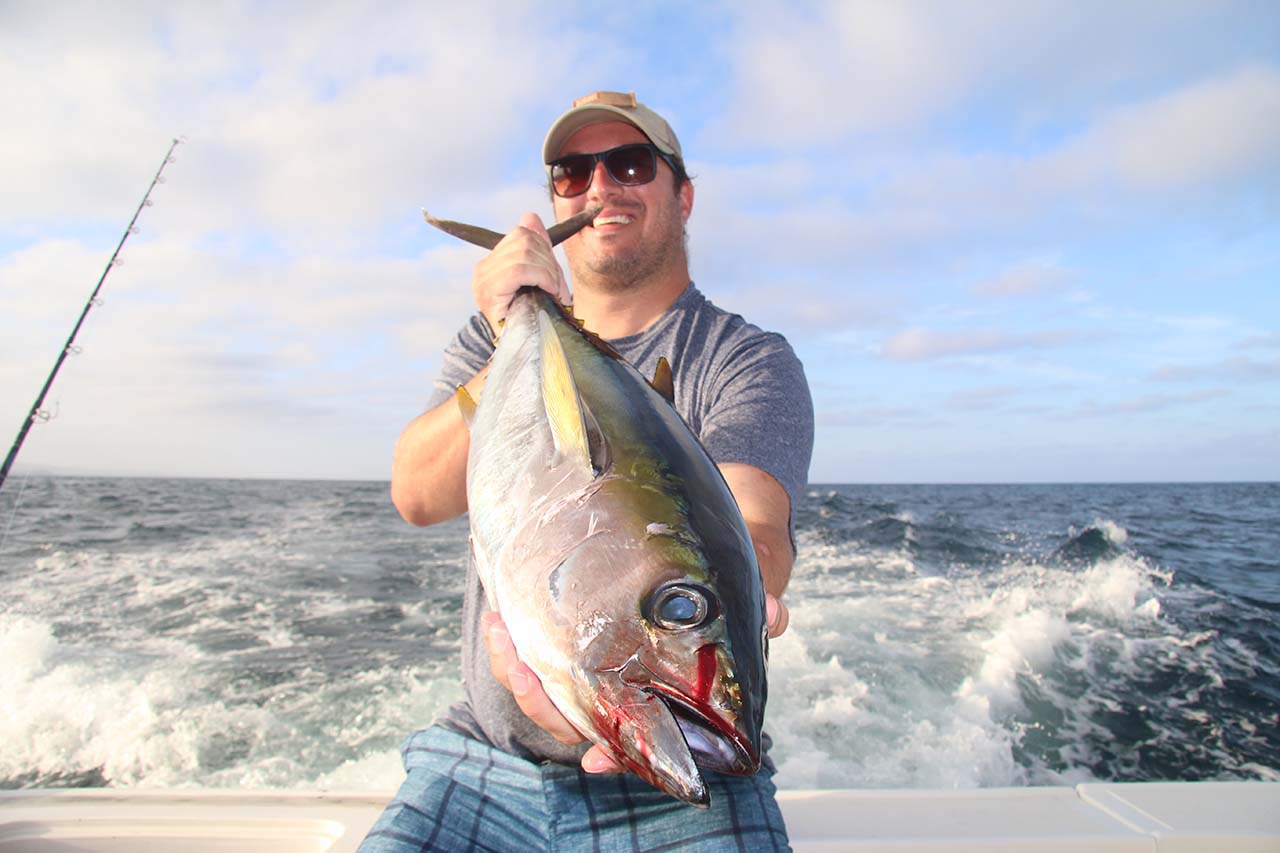
Not all yellowfin tuna are created equal. One of the most fascinating aspects of Cabo’s tuna fishery is the tremendous size range anglers may encounter. Football tuna typically weigh between 15 and 40 pounds. These fish are highly entertaining and often provide fast-paced action. They are strong fighters, excellent table fare, and ideal for anglers seeking multiple hookups. Cow tuna occupy an entirely different category. These giant yellowfin can exceed 200 pounds and occasionally approach even greater weights. Landing one requires specialized tackle, skilled crews, and a great deal of determination. The fight itself becomes a test of endurance. Large tuna often dive deep beneath the boat, forcing anglers into prolonged battles that can last hours.
Many anglers spend their entire lives dreaming of catching a true cow tuna. Cabo remains one of the destinations where that dream can become reality.
When Is Tuna Season in Cabo
Why Gordo Banks is Famous for Tuna Fishing
No discussion about Cabo tuna fishing is complete without mentioning Gordo Banks. Located northeast of Cabo San Lucas, this underwater structure has earned legendary status among local captains. The banks rise dramatically from surrounding depths, creating conditions that concentrate baitfish and attract predators. Tuna, marlin, wahoo, and dorado all utilize this productive area throughout the year. When yellowfin tuna move through Gordo Banks, the fishing can be exceptional. The structure creates natural feeding opportunities that help sustain large fish populations.
Captains monitor conditions closely because water temperature, bait concentrations, and current direction all influence productivity. Many of Cabo’s most impressive tuna stories originate from Gordo Banks.
Why the 1150 Area Produces Some of Cabo’s Largest Tuna
The offshore region commonly known as the 1150 has become another favorite destination for serious tuna anglers. Located farther offshore, this area frequently attracts larger fish because of its productive feeding environment and favorable oceanographic conditions.
The 1150 is often associated with:
- Large yellowfin tuna
- Blue marlin
- Productive temperature breaks
- Flying fish activity
- Deep offshore structure
When conditions align, anglers targeting the 1150 may encounter fish capable of creating truly unforgettable experiences. Many crews consider it one of the premier offshore destinations in all of Baja California Sur.
How Kite Fishing Changed Tuna Fishing in Cabo
One of the most effective techniques for targeting giant yellowfin tuna involves kite fishing. The concept is simple but highly effective. Instead of presenting bait beneath the surface, crews use specialized kites to suspend flying fish above the water while allowing the bait to skip naturally across the surface. To a hungry tuna, the presentation appears completely natural. The result can be spectacular. Giant yellowfin often explode from beneath the surface to attack the bait, creating one of the most dramatic strikes in all of sportfishing.
Blue Sky Cabo has utilized kite fishing successfully for years, particularly when targeting larger tuna during peak season. This method continues producing some of the most exciting tuna encounters found anywhere in the world.
Why Tuna Follow Bait More Than Calendars
While anglers often focus on specific months, experienced captains frequently focus on something else entirely: bait. The answer to when is tuna season in Cabo? is ultimately tied to food availability. Yellowfin tuna are constantly searching for feeding opportunities. When sardines, mackerel, squid, and flying fish gather in large concentrations, tuna typically follow.
Successful captains spend much of their day monitoring:
- Bird activity
- Porpoise schools
- Water temperatures
- Current breaks
- Sonar readings
These indicators often reveal more about tuna location than the calendar itself. The most productive fishing days usually occur when favorable seasonal conditions align with abundant bait concentrations.
Why Blue Sky Cabo Continues Producing Consistent Tuna Success
Over the years, Blue Sky Cabo has built a strong reputation for tuna fishing by focusing on preparation, adaptability, and advanced techniques. Successful tuna fishing requires much more than simply locating fish.
Crews must understand seasonal patterns, monitor bait movement, maintain quality equipment, and adapt to changing offshore conditions.
The company regularly utilizes:
- Live bait systems
- Kite fishing
- Flying fish presentations
- Advanced electronics
- Local seasonal knowledge
This commitment to preparation helps explain why so many anglers return repeatedly in search of tuna. Whether targeting football-sized yellowfin or giant cow tuna, the objective remains the same: maximize opportunities and create memorable experiences.
Where to Enjoy Fresh Tuna After Your Charter
One of the rewards of successful tuna fishing is enjoying the catch afterward. Yellowfin tuna is highly prized for its flavor and versatility. Many visitors look forward to turning their catch into sashimi, poke, grilled steaks, or specialty dishes prepared by local restaurants. Several marina-area restaurants have become popular among anglers who wish to enjoy their fresh catch after a day on the water. The experience adds another memorable dimension to a Cabo fishing vacation.
After battling a powerful tuna offshore, sitting down to enjoy a professionally prepared meal made from the day’s catch creates a satisfying conclusion to the adventure.
The Final Answer to When is Tuna Season in Cabo
After examining the seasons, fishing patterns, bait movements, and offshore conditions, the answer becomes much clearer. While yellowfin tuna can be caught during much of the year, late summer and fall consistently represent the strongest period. August marks the beginning of prime fishing, September often delivers outstanding action, and October frequently combines exceptional size potential with impressive consistency. November remains highly productive, while other months continue offering opportunities depending on water conditions and bait availability. For anglers focused on football tuna, numerous months can produce excellent action. For those pursuing giant yellowfin capable of exceeding 200 pounds, late summer and fall deserve special attention.
Ultimately, when is tuna season in Cabo? is best answered by understanding your fishing goals. If the dream is nonstop action, several months may fit perfectly. If the objective is a trophy-class yellowfin, targeting the peak fall season often provides the greatest opportunity. The reason so many anglers return to Cabo year after year is simple. The fishery remains productive, diverse, and exciting throughout much of the calendar year.
Whether fighting a 25-pound football tuna or a giant cow tuna that pushes tackle to its limits, Cabo San Lucas continues to provide some of the finest yellowfin tuna fishing opportunities anywhere in the world.
