
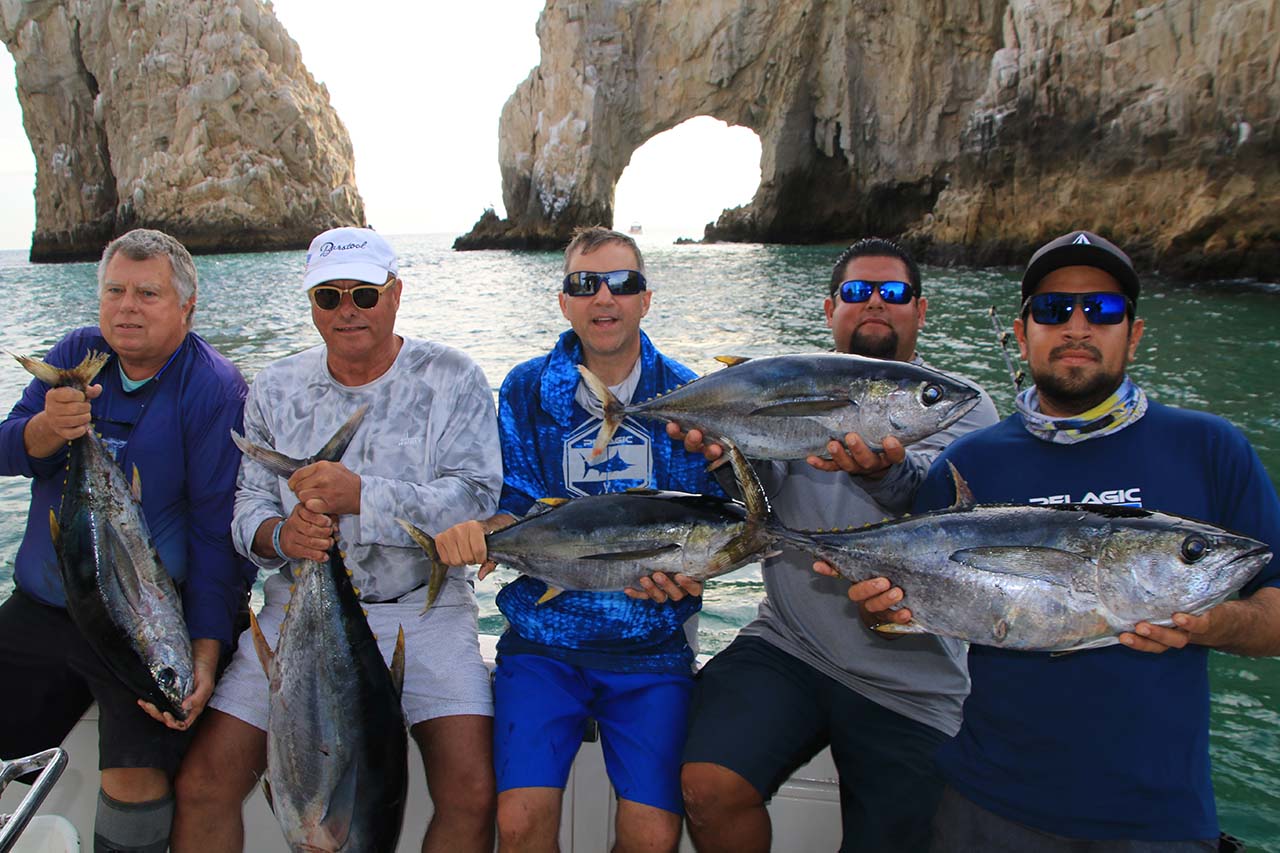
Tuna fishing in Cabo San Lucas is one of those experiences that feels completely different from everything else offshore. It’s faster, more aggressive, and often more unpredictable than marlin fishing. Instead of waiting for a fish to rise behind a spread, tuna can explode on the surface, crash bait under birds, or appear suddenly in tight schools that turn the ocean into chaos for a few minutes at a time. That is exactly why understanding Cabo fishing calendar tuna season is so important—it allows you to anticipate when those moments are most likely to happen. Fishing in Cabo for tuna is not just about being in the right place it is about being there at the right time, with the right setup, and the right awareness. Tuna follow bait relentlessly, and their behavior is tied closely to temperature, current movement, and structure. Some months produce steady action with smaller fish, while others offer the chance at massive yellowfin that completely change the tone of a trip. That is the depth behind Cabo fishing calendar tuna season—it is not just a schedule, it is a system.
The biggest advantage Cabo offers is that tuna are present in some capacity throughout much of the year, but the quality of the fishery shifts dramatically by season. Understanding those shifts where tuna hold, how they feed, and what they respond to—is what separates an average trip from a highly productive one.
How the Cabo fishing calendar tuna season begins in winter with scattered schools and deeper, more selective feeding patterns offshore
Winter is not typically known as peak tuna season in Cabo, but that does not mean tuna disappear. Instead, their behavior changes. Water temperatures drop into the low to mid 70s, and tuna often hold deeper in the water column. Schools are smaller and more scattered, and feeding behavior becomes less explosive. Instead of surface chaos, winter tuna fishing often requires patience and a more technical approach. Fishing in Cabo during this period often takes place offshore around structure like the 1150 Bank and Gordo Banks, where bait still holds in pockets. Tuna may not always show themselves on the surface, so crews rely more on sonar, bird behavior, and subtle water movement to locate them. This is a quieter phase of Cabo fishing calendar tuna season, but still productive for anglers who understand how to work it.
Bait becomes more important than lure presentation during winter. Chunking, slow trolling live bait, and using smaller, natural offerings tend to outperform aggressive trolling spreads. It is a season where discipline and patience matter more than speed.
Why spring introduces a transitional Cabo fishing calendar tuna season where movement increases and locating active fish becomes the primary challenge
Spring begins to loosen the system, but it does not fully activate tuna fishing just yet. As water temperatures start rising, tuna begin moving more frequently, following bait that is also shifting with currents. Schools can be difficult to locate, and when found, they may not hold in one area for long. This creates a more challenging but still rewarding fishery. Fishing in Cabo during spring becomes a game of observation. Bird activity becomes one of the most reliable indicators of tuna presence. Even a few birds working a small patch of water can signal opportunity. The key is reacting quickly and positioning the boat correctly before the school moves.
Lure and bait strategy begins to diversify. While live bait remains effective, small lures, cedar plugs, and feather jigs start producing as tuna become more willing to chase. This is a building phase of Cabo fishing calendar tuna season, where activity is increasing but not yet at full strength.
How early summer begins to activate the Cabo fishing calendar tuna season with stronger bait presence and increasing surface feeding behavior
As June rolls in, the offshore environment starts shifting in a way that favors tuna. Water temperatures climb into the mid to upper 70s, and bait becomes more organized. This change is critical because tuna respond directly to bait concentration. When bait starts holding along current edges and offshore structure, tuna begin feeding more aggressively and more visibly. Fishing in Cabo during early summer becomes more exciting. Surface activity increases, bird schools become more active, and tuna begin pushing bait toward the top. While not yet at peak levels, the fishery begins showing signs of what is coming.
This stage of Cabo fishing calendar tuna season rewards flexibility. Crews may switch between trolling and casting, depending on what the fish are doing. Live bait, small lures, and even casting poppers can all be effective depending on the situation.
Why peak summer defines the strongest Cabo fishing calendar tuna season for aggressive feeding, large schools, and high-energy offshore action
From July through September, tuna fishing in Cabo reaches its peak. Water temperatures stabilize in the high 70s to low 80s, creating ideal conditions for yellowfin tuna. Bait is abundant, currents are strong, and the offshore system is fully developed. Tuna begin forming larger schools, and their feeding behavior becomes explosive. Fishing in Cabo during this period is intense. Bird activity becomes the primary signal, with frigates and diving birds marking feeding tuna below. When schools are active, the water can erupt with surface strikes, creating fast-paced, high-energy fishing. This is also when larger tuna begin appearing more consistently. While smaller “football” tuna are common, the potential for much larger fish becomes real. Offshore zones like the 1150 and Gordo Banks become highly productive, along with areas where current lines intersect with bait.
Bait and lure strategies expand during this phase of Cabo fishing calendar tuna season. Live bait, cedar plugs, feathers, and kite fishing with flying fish all become effective. This is the most aggressive and rewarding period for tuna anglers.
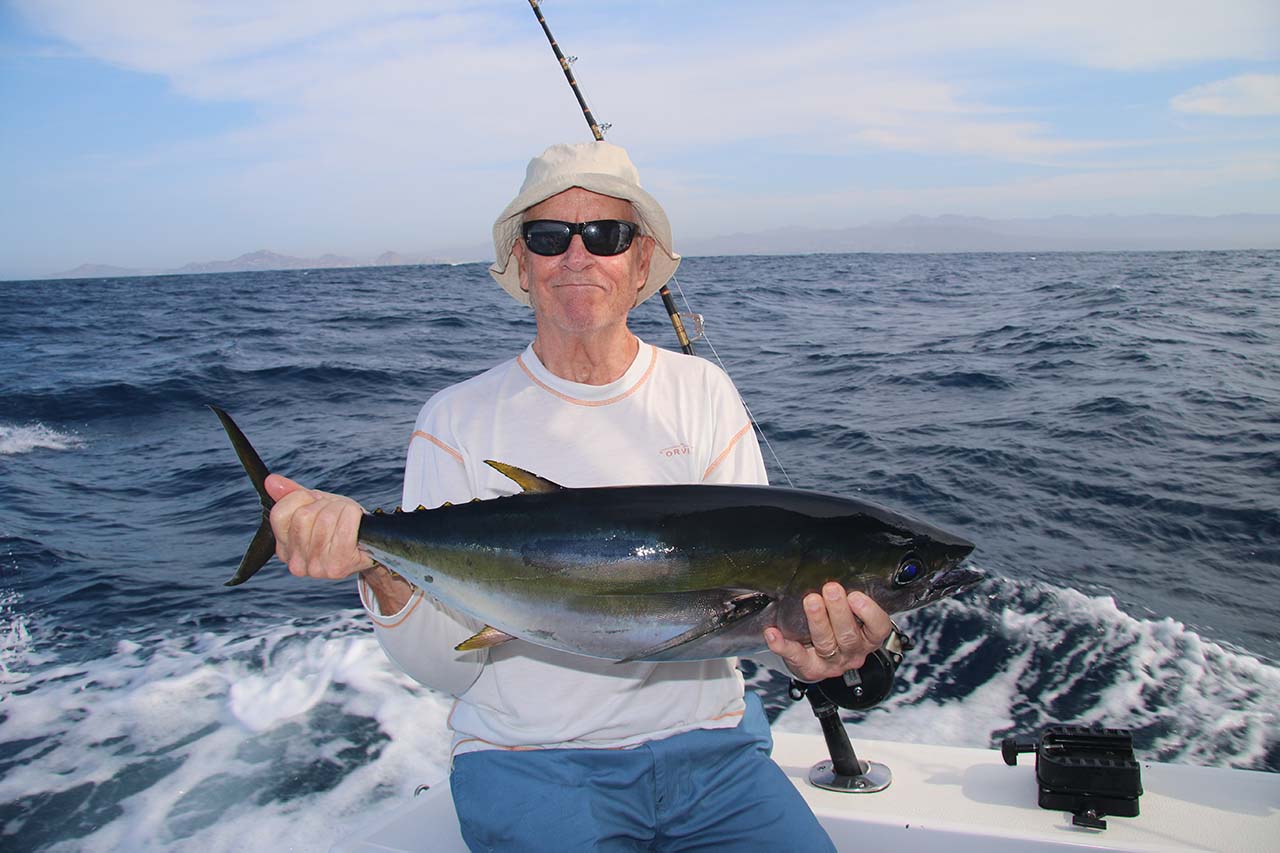
How fall continues the Cabo fishing calendar tuna season with some of the best opportunities for both quantity and quality offshore
Fall is often considered one of the best overall tuna periods in Cabo. Water temperatures begin cooling slightly, but remain warm enough to support strong feeding behavior. Bait is still abundant, and tuna continue forming schools that can be both large and active. This creates a balanced fishery with both quantity and quality. Fishing in Cabo during fall often feels more controlled than summer. The chaos is still there, but it is more predictable. Crews can locate productive zones more consistently and stay on fish longer.
This phase of Cabo fishing calendar tuna season is particularly appealing because it combines strong action with the potential for larger fish. Tuna can be found both offshore and closer to structure, depending on conditions.
Key seasonal tuna patterns, locations, and bait strategies that define the Cabo fishing calendar tuna season throughout the year
- Winter: Smaller, deeper tuna around offshore banks using live bait and chunking techniques
- Spring: Scattered schools with increasing movement, using mixed bait and small lures
- Early Summer: Growing surface activity near current edges with live bait and casting options
- Peak Summer: Large schools and aggressive feeding offshore using cedar plugs, kites, and live bait
- Fall: Balanced fishing with strong numbers and size potential across offshore zones
These patterns provide a complete overview of Cabo fishing calendar tuna season and help anglers plan effectively.
Why bird activity, bait concentration, and water clarity define success more than anything else in tuna fishing Cabo
Tuna fishing is visual, and the ocean gives clear signals if you know how to read them. Birds are the most obvious indicator. Frigates circling, birds diving, or even scattered activity can point to tuna below. Bait is equally important if bait is present, tuna are often nearby. Water clarity also plays a role, as cleaner water tends to hold more active fish. Fishing in Cabo becomes far more productive when these elements align. Instead of guessing, crews follow life. This is one of the most important lessons within Cabo fishing calendar tuna season.
- Birds actively diving and feeding on the surface
- Bait schools visible or detected below the boat
- Water showing life with movement and surface disturbance
- Temperature holding within a productive range
- Tuna breaking the surface or pushing bait
- Repeated activity in a specific zone rather than isolated events
- Multiple hookups within a short period
These signs indicate that the system is working.
How Blue Sky Cabo Fishing and Tours adapts to every phase of the Cabo fishing calendar tuna season with precision and real-time adjustments
Tuna fishing rewards crews that react quickly, and this is where experience matters. Blue Sky Cabo Fishing and Tours focuses on real-time observation tracking birds, reading bait, and adjusting tactics instantly. Their ability to switch between trolling, live bait, and casting allows them to stay aligned with tuna behavior throughout the day.
Fishing in Cabo with a crew that understands Cabo fishing calendar tuna season turns fast-moving opportunities into consistent results.
Why tuna fishing in Cabo offers one of the most dynamic and rewarding offshore experiences for anglers who understand timing and conditions
Tuna fishing is not passive it is active, engaging, and often unpredictable in the best way. From quiet moments scanning the horizon for birds to sudden bursts of action when a school erupts, the experience is constantly changing. That is what makes it so exciting.
Fishing in Cabo during the right phase of Cabo fishing calendar tuna season gives anglers access to one of the most dynamic fisheries in the world. Tuna in Cabo do not follow a single peak they follow a cycle. Winter offers selective opportunities. Spring builds movement. Early summer activates the system. Peak summer delivers intensity. Fall balances everything into a refined fishery. When you understand how Cabo fishing calendar tuna season works across the entire year, you begin to see patterns instead of randomness. You fish with intention, adjust with confidence, and ultimately create better results on the water.
