
February in Cabo San Lucas is a month anglers talk about in stories long after the trip is over. The crowds thin, the sun sits lower in the sky, and the ocean settles into a rhythm that seems to invite striped marlin, yellowfin tuna, wahoo, and a wide mix of inshore species to feed with confidence. When travelers search bait and tackle Cabo in February, they’re usually looking for more than a shopping list. They want to understand how the season changes the fish, how the water changes the presentation, and how the right charter can turn good conditions into a truly memorable day on the water. Blue Sky Cabo Fishing and Tours has built its reputation around exactly that kind of understanding. Their crews don’t just hand you a rod. They explain why a certain leader is tied, why a lure color is swapped, or why the boat shifts a mile to the west when the water temperature changes by a single degree. February rewards that level of detail, and this guide walks through the bait and tackle strategies that consistently produce results during one of Cabo’s most balanced and productive fishing months.
Why February Shapes Every Bait and Tackle Cabo Decision
February sits in a sweet spot in Cabo’s fishing calendar. Water temperatures hover in a range that keeps baitfish active but not scattered. That concentration of bait brings predators closer to shore and keeps offshore species cruising temperature breaks and current lines. For anglers, this means one thing: versatility. Blue Sky Cabo captains start most February mornings with a mixed approach. A spread that includes live bait, artificial teasers, and skirted lures allows them to “ask the ocean a question” and see how the fish answer. Within the first hour, patterns begin to emerge. Maybe marlin are pushing bait to the surface. Maybe tuna are holding deeper under birds. Those early signs dictate how the rest of the day unfolds and how the bait and tackle Cabo strategy evolves.
Bait and Tackle Cabo Foundations for February Success
Before diving into species-specific setups, it helps to understand the foundation. February fishing in Cabo is rarely about a single rod or a single lure. It’s about building a system that can change with conditions.
Blue Sky Cabo crews often focus on three core principles:
- Natural presentation in clear water
- Visibility and vibration when surface conditions turn choppy
- Strength near structure for inshore species that run for the rocks
These principles guide every leader choice, hook size, and lure color that goes into the day’s setup.
Live Bait and the Heart of Bait and Tackle Cabo Fishing in February
Live bait remains one of the most powerful tools in Cabo, especially during February when predators are actively feeding but still selective.
Common Live Baits You’ll See in February
- Mackerel – A top choice for striped marlin and larger tuna.
- Sardines – Excellent for inshore species and surface-feeding tuna.
- Caballito (Green Jack) – A versatile bait that appeals to marlin, wahoo, and dorado.
Blue Sky Cabo prioritizes fresh, lively bait. A baitfish that swims naturally in the water column sends out subtle signals that predators pick up instantly. February’s relatively clear water means fish often get a good look at what they’re chasing, so presentation matters.
Tackle Adjustments for Live Bait
When fishing live bait, crews often use lighter fluorocarbon leaders to maintain a natural look. Circle hooks are common, especially for billfish, as they improve hook-up ratios and support catch-and-release practices.
Artificial Lures and Bait and Tackle Cabo Strategies for Covering Water
Artificial lures shine in February when the goal is to locate fish rather than wait for them.
Skirted Trolling Lures
These are a staple for marlin, tuna, and wahoo. Colors like purple-and-black, blue-and-white, and pink often perform well in February’s mixed water clarity.
Diving Plugs
A favorite for wahoo. Their erratic swimming action mimics injured baitfish and triggers aggressive reaction strikes.
Jigs and Soft Plastics
When tuna schools are found under birds or holding deep, vertical jigs and soft plastics dropped into the zone can turn a quiet patch of ocean into a flurry of bent rods. Blue Sky Cabo often blends these artificial presentations with professional-grade attractors like Squid Nation and Witch Doctor teasers, creating a visual and vibration-heavy spread that pulls predators closer to the boat.
Bait and Tackle Cabo Setups for Striped Marlin in February
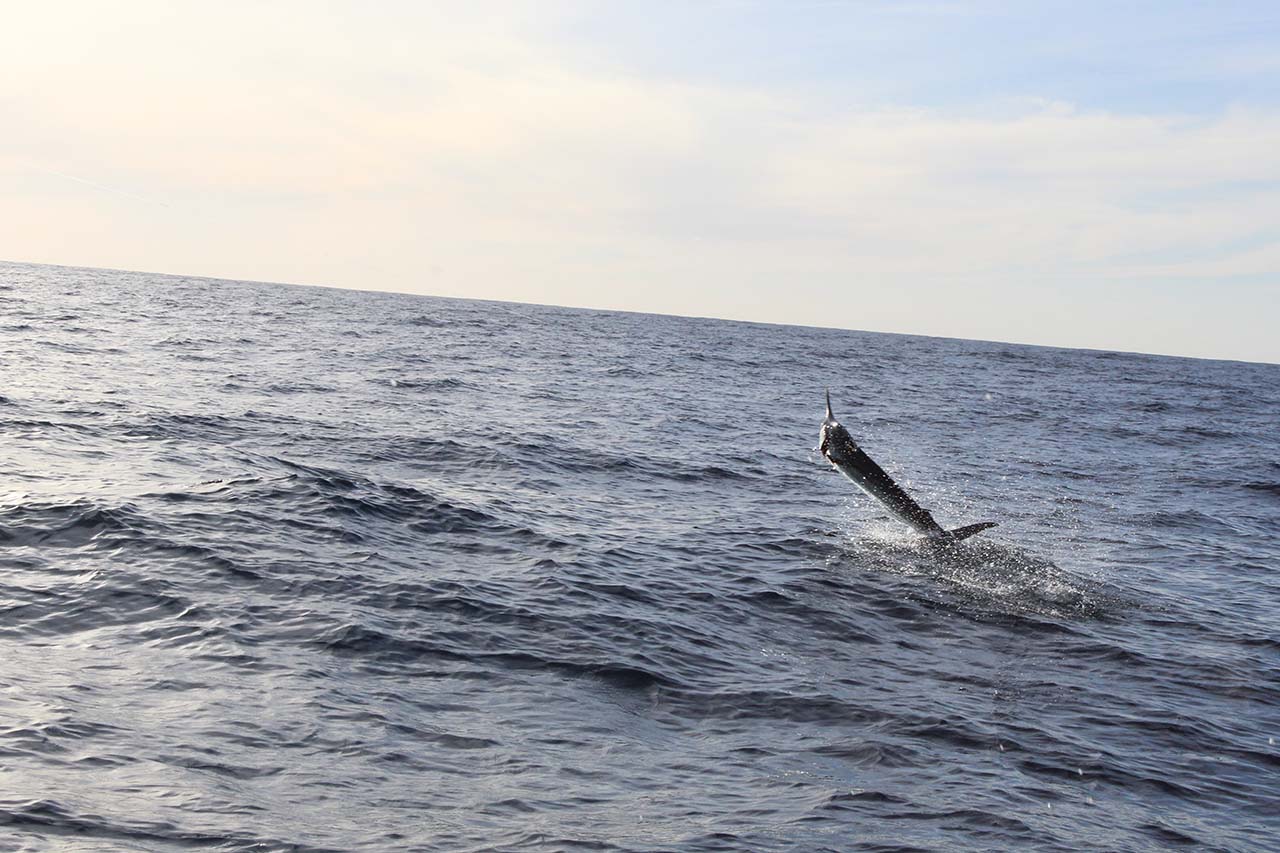
Striped marlin are the headline act in February. They’re known for chasing surface teasers and putting on aerial displays that make even seasoned anglers reach for their cameras.
Typical Tackle Setup
- Rod Class: 30–50 lb trolling rods
- Reels: Lever-drag reels with smooth, consistent drag
- Line: 50–80 lb braided mainline with mono top shot
- Leader: 80–100 lb fluorocarbon
Bait and Presentation
- Live mackerel or caballito
- Ballyhoo rigs
- Skirted lures dropped back behind teasers
Blue Sky Cabo crews often run a teaser spread to bring marlin into the wake. Once a fish shows interest, a bait is dropped back for a natural, irresistible presentation. This technique creates some of the most exciting moments of February fishing, with marlin lighting up behind the boat before the strike.
Tuna Gear and Bait and Tackle Cabo Techniques for February Runs
Yellowfin tuna in February can range from fast-moving football-sized fish to larger, deep-running bruisers that test both angler and equipment.
Recommended Gear
- Rod Class: 40–80 lb stand-up rods
- Reels: High-capacity spinning or conventional reels
- Line: 65–100 lb braid
- Leader: 60–100 lb fluorocarbon
Bait and Lure Choices
- Live sardines
- Metal jigs
- Cedar plugs
- Flying fish-style lures
Blue Sky Cabo captains often track bird activity and surface boils. When tuna start feeding on top, quick reactions and fast presentations can turn a slow morning into an unforgettable midday bite.
Wahoo-Specific Bait and Tackle Cabo Approaches
Wahoo are known for speed, power, and razor-sharp teeth. February’s cooler water keeps them active and aggressive.
Tackle Setup
- Rod Class: 50–80 lb
- Reels: High-speed trolling reels
- Line: 80 lb mono or braid
- Leader: Wire leaders to prevent bite-offs
Lure Selection
- High-speed trolling lures
- Deep-diving plugs
- Jet heads
Blue Sky Cabo often adjusts trolling speeds throughout the day, looking for the pace that triggers reaction strikes from these lightning-fast predators.
Inshore Fishing and Bait and Tackle Cabo Gear for February
Inshore fishing in February is perfect for families, casual anglers, and anyone who enjoys steady action close to the coastline.
Target Species
- Snapper
- Grouper
- Roosterfish
- Sierra mackerel
Tackle Setup
- Rods: Medium to heavy spinning rods
- Reels: 4000–6000 size spinning reels
- Line: 20–40 lb braid
- Leader: 30–60 lb fluorocarbon
Baits
- Live sardines
- Cut bait
- Soft plastics
Fishing near rocky points and reefs requires strong leaders and careful rod work. Blue Sky Cabo crews often coach guests on how to keep pressure on fish to prevent them from diving back into structure.
The Role of Teasers and Dredges in Bait and Tackle Cabo Success
One of the standout features of Blue Sky Cabo’s February strategy is their use of custom teasers and dredges. These include neon-painted PVC pipes, resin-reinforced beer cans, and professional-grade dredges that mimic large schools of baitfish.
These tools don’t hook fish directly. Instead, they create a visual “bait ball” in the wake that draws predators closer, where live bait or lures wait for the strike. This method is especially effective for marlin, which often rise to investigate surface activity before committing.
Reading the Water and Adjusting Your Bait and Tackle Cabo Plan
February’s conditions can change quickly. A glassy morning can turn into a breezy afternoon, and water clarity can shift with tides and currents. Blue Sky Cabo captains often make adjustments such as:
- Switching lure colors based on sunlight and water color
- Changing leader strength when fish become leader-shy
- Slowing or speeding up trolling based on wind and current
These small changes often make a big difference, especially during a month when fish are active but still selective.
Bait and Tackle Cabo Tips for First-Time Anglers in February
February is one of the best months for beginners to experience Cabo fishing. The bite is steady, and the weather is comfortable.
Beginner-Friendly Advice
- Start with inshore trips for consistent action
- Use spinning tackle for easier handling
- Let the crew handle rigging and adjustments
- Focus on technique and timing rather than strength
Blue Sky Cabo’s English-speaking crews are known for their patience and clear instruction, helping first-time anglers feel confident and involved from the first cast to the final photo at the dock.
How All-Inclusive Charters Elevate the Bait and Tackle Cabo Experience
Blue Sky Cabo’s all-inclusive model means everything is ready when you arrive. Premium rods, reels, fresh bait, licenses, meals, and drinks are part of the package. This approach lets guests focus on learning, fishing, and enjoying the day rather than worrying about logistics or extra costs.
Guest Stories That Highlight February Bait and Tackle Cabo Fishing
Many reviews on Google and TripAdvisor mention how the crew explains the reasoning behind each setup. Guests often talk about learning why a certain lure worked better in the afternoon light or why a lighter leader improved bite rates in clear water. These educational moments turn a fishing trip into an experience that feels both adventurous and insightful.
Planning Your February Trip Around the Right Bait and Tackle Cabo Strategy
When booking a February charter, think about your goals:
- Marlin-focused: Full-day offshore trip with teaser spreads and live bait
- Family-friendly: Half-day inshore fishing with spinning tackle
- High-energy action: Tuna hunts with jigs and fast trolling
Blue Sky Cabo’s booking team helps match your group with the right boat and trip length, ensuring the bait and tackle plan fits the experience you want.
Why Blue Sky Cabo Leads in Bait and Tackle Cabo Expertise
Years of fishing Cabo’s waters have given Blue Sky Cabo a deep understanding of February’s patterns. Their ability to blend traditional techniques with custom gear and modern electronics sets them apart. From handcrafted teasers to advanced fish-finding systems, every part of their setup is designed to improve guest success and enjoyment. Blue Sky Cabo emphasizes circle hooks, proper fish handling, and careful release techniques, especially for marlin and other billfish. February’s productive fishing makes responsible practices even more important, ensuring Cabo’s fishery remains healthy for years to come.
Final Thoughts on Bait and Tackle Cabo Fishing in February
So, what bait and tackle work best for Cabo fishing in February? The answer lies in balance and adaptability. Live bait and artificial lures each play key roles. Heavy offshore gear and lighter inshore tackle both have their moments. Teasers and dredges add excitement and effectiveness, while thoughtful leader and hook choices improve both catch rates and sustainability. February is a month that rewards anglers who pay attention to the details. With Blue Sky Cabo Fishing and Tours, those details are handled by a team that understands the ocean, reads the conditions, and knows how to turn the right bait and tackle into unforgettable fishing stories.
For bookings, fishing videos, and daily updates, explore: Your February fishing adventure in Cabo starts with the right gear and the right crew to help you use it.
Contact Information
- Website: Blue Sky Cabo
- TripAdvisor Reviews: Blue Sky Cabo Fishing and Tours
- Google Reviews: Blue Sky Cabo
- Facebook Page: Blue Sky Cabo
- YouTube Channel: Blue Sky Cabo
- YouTube Shorts & Reels: Blue Sky Cabo
- Cell / WhatsApp: +1.480.635.2965
