
Cabo Fishing Report – Blue Sky Cabo Fishing Charters
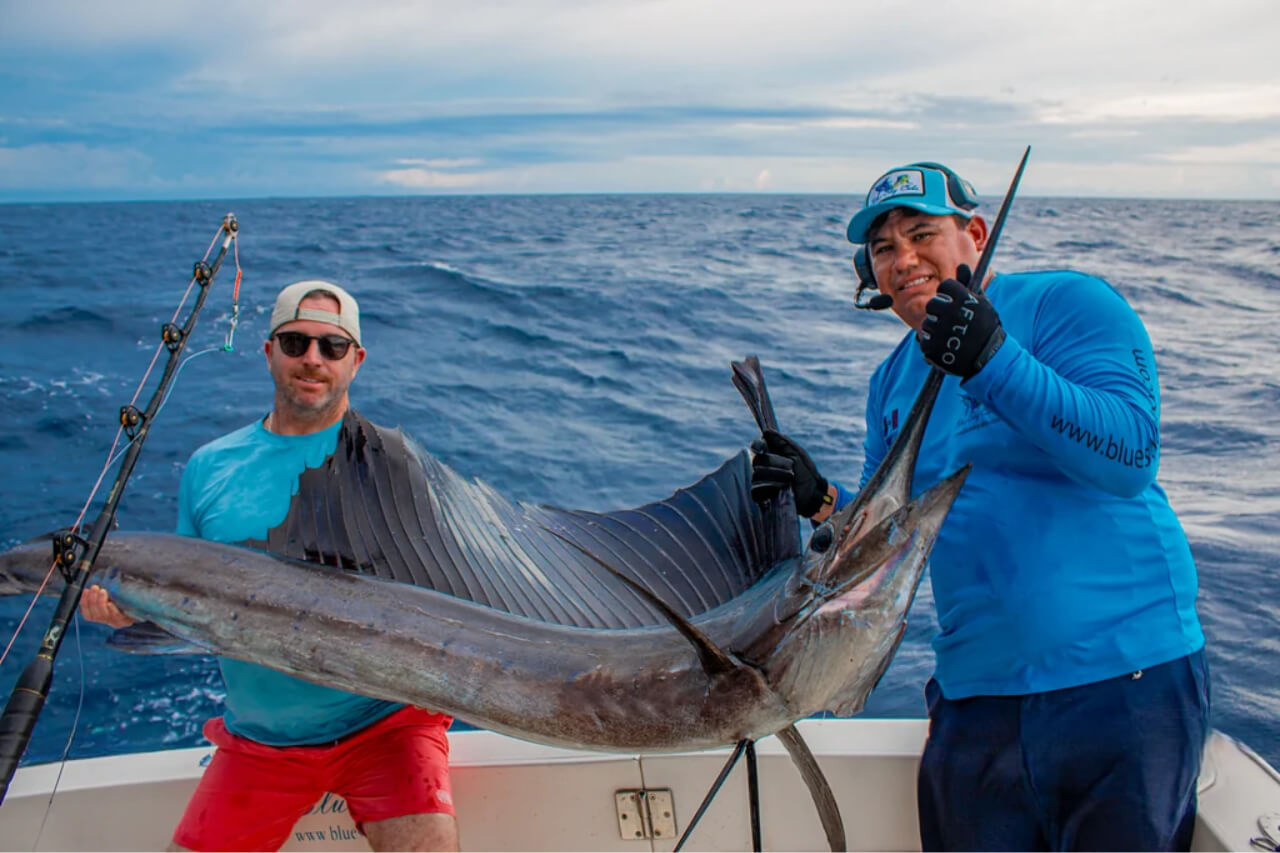
1 Sailfish Caught and Released
Date: September 7, 2026
Catch: 1 Sailfish
Total Game Fish: 1
Kept: 0
Released: 1 Sailfish
Angler: Thomas – Solo Angler
Boat: Blue Sky – 43′ Riviera
Captain: Luis
Charter Length: 8 Hours
Charter Time: 6:00 AM – 2:00 PM
Fishing Location: Horseshoe
Tackle: Dredge
Trip Type: Private Cabo Fishing Charter
A Full Day of Fishing Gives a Solo Angler More Time to Explore the Offshore Waters of Cabo
Thomas joined Captain Luis on September 7 for a private eight-hour charter that would ultimately be defined by a single quality billfish encounter rather than a large catch count. Fishing as the only guest aboard gave Thomas the entire day to himself, with no rotation between anglers and no need for the crew to divide its attention among several people with different expectations. The plan was to spend the day offshore, work the Horseshoe and use a dredge as part of the trolling presentation while looking for the kind of pelagic activity that can turn a quiet stretch of water into an exciting fishing opportunity within minutes.
The final result was one sailfish caught and successfully released, which accurately reflects a day when persistence mattered considerably more than volume. There were no additional game fish recorded and nothing was brought back to the marina, but that does not diminish what Thomas experienced when the sailfish finally entered the program. Offshore fishing around Cabo is unpredictable by nature, and an eight-hour charter can include long periods of searching before a single encounter changes the character of the entire trip.
Because Thomas was fishing alone, every opportunity belonged to him from the moment the charter began. A solo trip creates a different dynamic aboard the boat because the captain and crew can concentrate on one angler, one fishing objective and one set of expectations without having to manage a rotation between guests. When the sailfish opportunity eventually developed, there was no question about whose turn it was on the rod, allowing Thomas to experience the entire sequence from the initial encounter through the fight and eventual release.
Fishing the Horseshoe Adds Another Useful Entry to Cabo’s Growing Historical Catch Record
The Horseshoe was the fishing location recorded for this September charter, and documenting where the crew actually worked is an important part of maintaining a meaningful historical report. Simply stating that a sailfish was caught provides a result, but recording the date, fishing grounds, charter duration and technique provides considerably more context for anglers who want to understand what was happening offshore rather than relying entirely on broad seasonal fishing calendars.
Pelagic fishing is influenced by an enormous number of variables, many of which can change quickly. Currents shift, water temperatures fluctuate, bait concentrations move and cleaner offshore water can push into one area while another zone becomes less attractive. Sailfish, marlin, dorado and tuna are mobile predators capable of covering substantial distances, which means productive fishing grounds can change even within a relatively short period.
For Captain Luis, the challenge was therefore not simply to arrive at the Horseshoe and expect a fish to appear because the area had a recognizable name. The crew still needed to evaluate the water, maintain the trolling presentation and remain prepared for an opportunity that could develop suddenly. On September 7, that opportunity eventually came in the form of a sailfish, and Thomas was able to convert the encounter into the game fish that would define his charter.
Recording the Horseshoe in the statistics also allows the narrative to remain focused on the actual experience instead of repeatedly mentioning the location simply for search relevance. As Blue Sky Cabo continues building its archive of daily fishing reports, these individual location records become more useful because anglers can compare catches from different offshore areas, seasons and years without each report having to make broad claims about what a particular location will produce tomorrow.
Cabo Crews Use Dredge Fishing to Build a More Visible Offshore Presentation for Billfish
One of the most important tactical details from Thomas’s charter was the use of a dredge, which adds a much larger visual element to an offshore trolling spread than individual lures or baits can create on their own. When properly deployed, a dredge is designed to imitate the appearance of a concentrated group of baitfish moving behind the boat, giving an approaching predator something substantial to notice beneath the surface. The purpose of the dredge is attraction rather than actually hooking the fish. A sailfish or marlin may initially approach because the larger baitfish illusion catches its attention, after which the crew works to transfer that interest toward a properly positioned bait or lure within the fishing spread. This makes the dredge part of a coordinated system rather than an isolated piece of tackle, with boat speed, lure positioning, bait presentation and crew reaction all contributing to what happens when a billfish approaches.
This style of fishing can be particularly interesting because an encounter does not always begin with an immediate strike. A billfish may appear behind the dredge, investigate one side of the spread, change position or remain visible long enough for the crew to react before committing to a bait. Those moments demand concentration because an offshore morning can transition from routine trolling to a highly active situation almost immediately.
For Thomas, the dredge was part of the program while Captain Luis worked the Horseshoe, and the day’s single sailfish provided a successful outcome to that approach. The report does not need to suggest that the dredge guarantees a fish, because no piece of fishing equipment can make that promise; what matters historically is that the crew used the technique and ultimately produced a billfish encounter.
Sailfish Bring a Combination of Speed and Visual Excitement to Fishing off Cabo San Lucas
Among the game fish encountered in the waters surrounding Cabo San Lucas, sailfish are particularly recognizable because of their elongated bills and oversized dorsal fins, yet their appearance tells only part of the story. Once a sailfish becomes involved in the trolling spread, its speed, directional changes and potential surface activity can transform the atmosphere aboard the boat, especially after a long period spent searching open water. The transition from trolling to fighting a billfish can happen quickly. One moment the crew may be monitoring the spread and watching the surrounding water for signs of life, while the next requires immediate coordination as a fish approaches and the angler prepares for the strike. Once hooked, the captain begins thinking about boat positioning while the crew manages tackle and clears anything that could interfere with the fight, leaving the angler to concentrate on maintaining pressure and responding to the fish.
Thomas had the advantage of being the only angler aboard, so the sailfish encounter was entirely his from the beginning. With Captain Luis controlling the boat and the crew assisting with the fishing operation, Thomas was able to work through the fight until the sailfish was brought under control and successfully released.
That release is an important part of the September 7 record because Blue Sky Cabo treats sailfish and marlin as release species. The objective is to locate the fish, create the opportunity, complete the fight and return the billfish to the water rather than bringing it back to the marina merely to demonstrate that it was caught.
Catch-and-Release Fishing Keeps the Focus on the Billfish Experience in Cabo
For many anglers traveling to Cabo specifically to encounter billfish, the release has become an integral part of the fishing experience rather than something that happens after the important part is finished. The anticipation begins while searching offshore water, continues when a fish enters the spread and reaches its most intense point during the fight, but watching a sailfish return to the water can provide an equally memorable conclusion. Thomas’s catch was recorded clearly as one sailfish released, with zero fish kept. That distinction matters because an accurate fishing report should document what happened to the fish rather than simply listing a species and leaving the reader to make assumptions.
Catch-and-release practices are especially relevant in a destination known internationally for billfish encounters. Sailfish and marlin are valued primarily as sport fish, and returning them to the water allows the focus to remain on the challenge of finding, hooking and fighting these animals instead of harvesting them. From a historical perspective, recording releases also makes the fishing archive more useful. Someone reviewing September reports in the future will be able to see not only that Thomas encountered a sailfish at the Horseshoe, but also that the fish was successfully released after the fight.
The day’s catch statistics are therefore uncomplicated: one game fish caught, one game fish released and nothing kept. Behind those simple numbers, however, was a full offshore fishing experience that required searching, patience, proper presentation and the ability to capitalize when the opportunity finally appeared.
Eight Hours of Fishing Gives a Cabo Captain More Flexibility as Offshore Conditions Develop
Charter length is one of the practical decisions anglers make before arriving in Cabo, and an eight-hour trip offers a different type of fishing day than a shorter morning charter. The primary advantage is not that eight hours guarantees more fish, because wild fish and changing ocean conditions make guarantees impossible, but rather that the additional time gives the captain more freedom to search, adjust and remain with promising conditions. A shorter charter can be ideal for families with younger children, vacationers who want fishing to occupy only part of their day or guests who simply prefer several hours on the water. An eight-hour charter is better suited to anglers who want to give the crew a broader working window, particularly when offshore fishing requires additional searching before productive water is located.
Thomas’s September 7 trip demonstrates why that extra time can matter even when the final catch count is modest. The fishing was not producing constant action, yet Captain Luis had enough time to continue working the program rather than having the entire day determined by an early return to the marina. Eventually, the sailfish appeared and provided the opportunity Thomas had been waiting for.
This is an important distinction when evaluating charter length. More hours increase fishing time and flexibility, but they should never be interpreted as a mathematical promise that twice as much time automatically produces twice as many fish. What a longer charter provides is a greater opportunity for the captain to respond to the ocean as conditions develop throughout the day.
Offshore Fishing Around Cabo Requires Observation Long Before the Rod Finally Bends
The most dramatic moments of offshore fishing naturally receive the most attention because a jumping billfish, brightly colored dorado or hard-running tuna makes compelling video and photography. What those moments rarely show is the amount of searching and observation that may have taken place before the strike occurred. A crew working offshore water is continually looking for information. Surface activity, birds, bait, current edges and changes in water appearance can all contribute to decisions about whether to remain in an area or continue searching. At the same time, the crew must maintain the trolling spread so that everything is ready when a predator finally appears.
This less dramatic portion of the fishing day is often where experience becomes particularly valuable. There may be nothing obvious happening for an extended period, yet the captain still has to decide whether the current water deserves more time or whether moving elsewhere provides a better opportunity. On September 7, the patience involved in this process eventually paid off. Thomas did not experience a rapid sequence of multiple game fish, but the crew stayed engaged long enough to generate the sailfish encounter that became the defining event of the charter.
Understanding this rhythm helps anglers approach a Cabo fishing trip with realistic expectations. Offshore fishing is not structured entertainment where action occurs at predictable intervals; it is an interaction with a changing marine environment where preparation and patience can become just as important as the few minutes when the rod is finally under load.
A Solo Fishing Charter Creates a More Personal Way to Experience Cabo
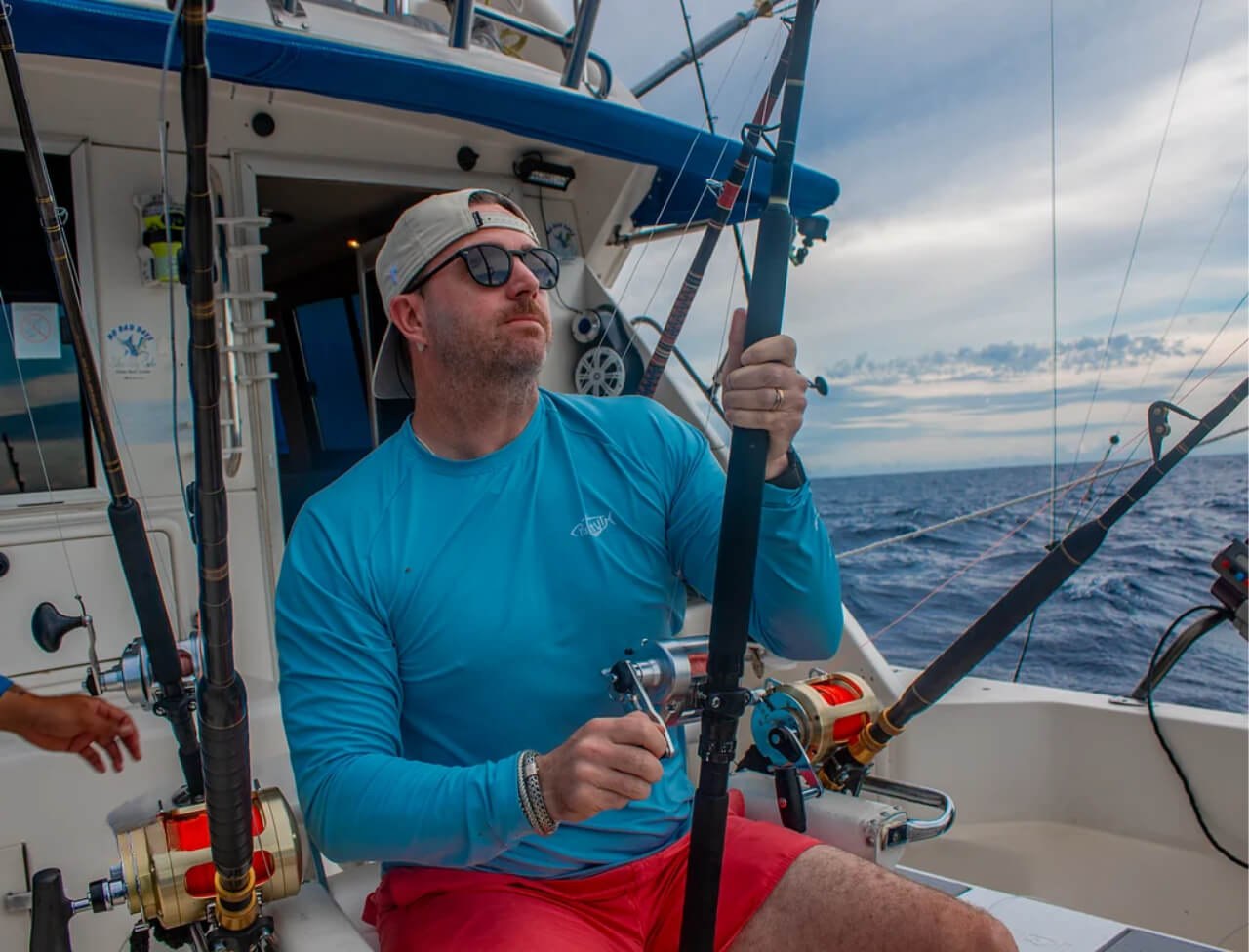
There is something distinctive about fishing aboard a private charter as the only guest, particularly for an angler who wants the day to revolve around the offshore experience rather than a group schedule. Thomas had the cockpit, crew attention and fishing opportunities to himself, creating a trip that could develop around one person’s interests without compromise. On a charter with several anglers, the crew normally establishes a rod rotation or another fair system for distributing opportunities. That arrangement works well for families and groups, but it inevitably means that one person may be watching while another fights the fish of the day. A solo charter removes that variable because every legitimate opportunity belongs to the same angler.
The arrangement can also allow for more direct interaction with the captain and crew. An experienced angler may want to discuss trolling techniques, offshore conditions or tackle in greater detail, while someone with less experience may appreciate having more individual guidance throughout the day. In either case, the crew can respond to one person’s experience level rather than balancing several different needs simultaneously.
For Thomas, the benefit became obvious when the sailfish appeared. After spending the day working offshore water, there was no need to check whose turn was next or decide who would take the rod. The encounter belonged to him, and that simplicity added another dimension to an already personal day of fishing.
Cabo Fishing Reports Have More Value When the Actual Result Is Allowed to Tell the Story
One of the easiest mistakes in writing daily fishing reports is trying to make every charter sound extraordinary. If every day is described as incredible, nonstop or unbelievable, the reports eventually lose their usefulness because readers can no longer distinguish an exceptional fishing day from an ordinary one. September 7 does not need that treatment. The charter produced one sailfish, which was released, and no other game fish were recorded. Those facts are enough to build a worthwhile report because they reflect what actually happened rather than what might sound more impressive in promotional copy.
There is considerable value in documenting moderate and difficult fishing days alongside the spectacular ones. When a boat catches numerous dorado or several billfish, that result should be recorded accurately; when another charter produces one fish after hours of searching, that deserves the same treatment. A historical fishing archive only becomes credible when it includes the full range of outcomes. Thomas’s trip is therefore useful precisely because the story is uncomplicated. Captain Luis worked the Horseshoe during an eight-hour charter, a dredge formed part of the fishing presentation, one sailfish was caught and the fish was released. Nothing about those facts needs to be inflated.
For someone considering a future Cabo charter, this type of reporting creates more realistic expectations while demonstrating that a single quality encounter can still provide the defining memory of a day offshore.
Years of Cabo Fishing Reports Can Build a Detailed Picture of Seasonal Offshore Activity
- A single fishing report is a snapshot, but a consistent archive covering hundreds of charter days can gradually become something much more informative. When reports include the date, species, location, charter length, technique and catch outcome, anglers gain access to actual historical results rather than relying solely on generalized statements about what is normally available during a particular month.
- This becomes especially useful when studying highly mobile offshore species. Sailfish, marlin, dorado, tuna and wahoo do not follow rigid calendar boundaries, and their presence can vary as water conditions and bait concentrations change. A seasonal chart might suggest that a species is commonly available during a certain period, while daily fishing reports provide specific examples of when that species was actually encountered.
- The September 7 report now becomes one of those examples. An angler researching early September fishing can see that Thomas encountered a sailfish while the crew worked the Horseshoe and that a dredge was incorporated into the program. When that information is viewed alongside other September reports, it contributes to a broader understanding of what was occurring during that period.
- No responsible fishing report should take one catch and turn it into a sweeping prediction about what every future charter will experience. The greater value comes from accumulating individual records and allowing longer-term patterns to emerge naturally from real results.
Actual Fishing Results Give Cabo Visitors More Context Than a Seasonal Calendar Alone
- Fishing calendars remain useful because they give travelers a general idea of which species may be present during different parts of the year, but they should be viewed as planning guides rather than guarantees. Ocean conditions do not suddenly change because the calendar moves from one month to another, and migratory fish certainly do not organize their movements according to a tourism schedule.
- Daily reports add another layer of information by showing anglers what boats were actually encountering during specific periods. A prospective guest interested in sailfish can review genuine catch reports, while someone targeting dorado or tuna can examine how those species appeared across different weeks and locations.
- The strength of this approach is specificity. Instead of telling an angler simply that September can produce billfish, the historical record can show an actual sailfish release on September 7, the location where the crew was fishing and the technique being used during the charter.
- That information still cannot predict what will happen on a future date, but it gives anglers a more grounded way to understand Cabo’s offshore fishery. Seasonal expectations remain useful, while real charter reports supply the details that broad calendars cannot provide.
Fishing With an Experienced Captain in Cabo Involves Constant Decisions Behind the Scenes
- Guests naturally judge a fishing day by the encounters they experience, but much of a captain’s work takes place before a fish ever reaches the spread. Offshore fishing involves a continuing series of decisions about where to begin, how long to remain in an area, whether the available signs justify staying and when a change in strategy might improve the chances of finding productive water.
- Those decisions become particularly important on a slower day because there may not be an obvious concentration of fish pointing the way. The captain has to interpret what is happening around the boat while also considering what has been observed earlier in the day and what the crew knows about the surrounding fishing grounds.
- Captain Luis had a full eight-hour window to make those decisions on September 7. The Horseshoe became the working area, the dredge was incorporated into the offshore presentation and the crew continued searching until the sailfish opportunity developed.
- The catch count does not reveal all of that decision-making, which is why evaluating a charter solely by the final number can miss much of what happens offshore. One fish may come quickly on an easy morning, while another may require hours of searching and adjustments before the opportunity appears.
- Thomas’s sailfish belonged to the latter type of day, making the successful release a fitting result after the time invested in finding the encounter.
One Sailfish Can Become the Memory That Defines an Entire Cabo Fishing Day
- Numbers are useful because they create an objective record, yet they do not always describe the importance of a particular fish to the angler who caught it. For someone who has never fought a sailfish, a single billfish can easily become more memorable than a much larger quantity of smaller fish.
- The experience includes far more than the final catch statistic. There is the anticipation of watching the trolling spread, the sudden activity when a fish appears, the physical work of the fight and the moment when the sailfish finally comes under control. When the fish is then released, the angler has experienced the complete sequence that brought them offshore in the first place.
- Thomas finished September 7 with one game fish recorded, but that number represents the culmination of an eight-hour private charter rather than an isolated entry on a catch sheet. He had the opportunity to fish the Horseshoe as the only guest aboard, watch the crew work a dredge presentation and ultimately fight the sailfish that became the day’s defining encounter.
- That is why fishing reports should preserve both the statistics and the story surrounding them. The numbers establish accuracy, while the narrative explains what those numbers actually meant on the water.
Final Cabo Fishing Report Summary
Thomas’s September 7 charter was an eight-hour offshore fishing day that rewarded patience with one quality billfish encounter. Working the Horseshoe with a dredge incorporated into the trolling presentation, Captain Luis and the crew continued searching until a sailfish entered the program and gave Thomas the opportunity he had been waiting for. As the only angler aboard, Thomas was able to experience the entire charter around his own fishing day, and when the sailfish appeared there was no rotation or uncertainty about who would take the opportunity. He completed the fight successfully, after which the fish was released back into the water in keeping with Blue Sky Cabo’s approach to sailfish and marlin.
The final catch record remains intentionally straightforward: one sailfish caught, one sailfish released and zero fish kept. There is no need to turn the charter into a high-volume fishing story because that was not what happened; instead, the value of the day came from spending a full eight hours offshore, working the Horseshoe and eventually converting one billfish opportunity into a successful catch and release.
As part of the larger Blue Sky Cabo fishing archive, this report also preserves another specific piece of the 2026 season. It records the species, location, charter duration, technique and outcome so that anglers researching Cabo in the future can see an authentic example of what occurred on the water rather than relying entirely on generalized seasonal claims.
For Thomas, however, the historical value is secondary to a much simpler memory: he went fishing in Cabo as a solo angler, spent the day offshore with Captain Luis and returned to the marina having successfully caught and released a sailfish.
Blue Sky Cabo Fishing and Tours
Cell / WhatsApp: +1.480.635.2965
