
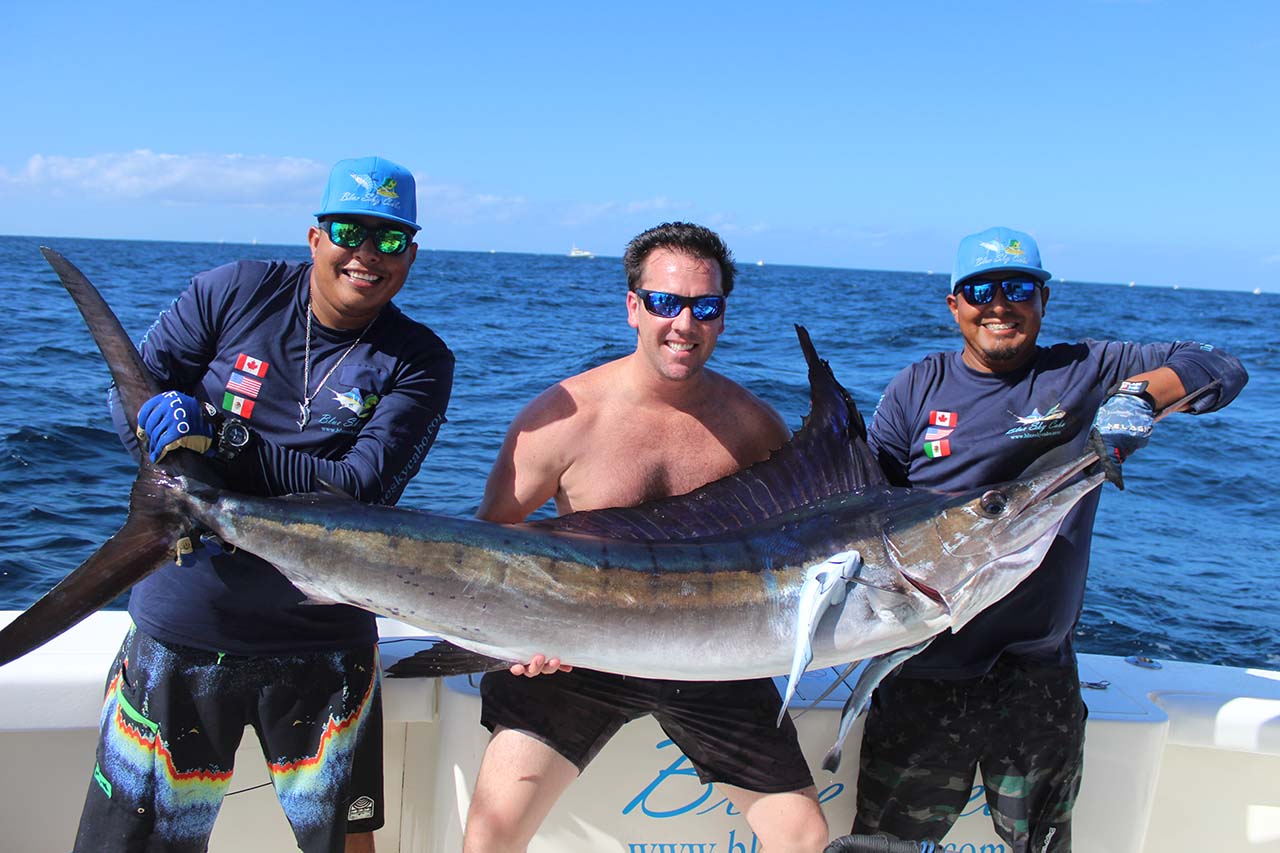
When anglers ask “Where should I fish (hot spots) in Cabo during February?”, they’re really asking: Where are the zones with the best chances for action from marlin, tuna, wahoo, and other seasonal species during one of Cabo’s most productive months?
Cabo San Lucas sits at the intersection of the Pacific Ocean and the Sea of Cortez one of the richest marine environments on the planet. In February, currents, water temperature breaks, and bait movement create a series of hot spots that consistently produce fish. Australian bait schools migrating through, converging thermoclines, and temperature breaks often put fish closer to shore than at other times of the year.
Blue Sky Cabo Fishing and Tours has spent years mastering these patterns. Their captains don’t just guess where the fish might be they read the water daily, looking for the signatures of bait and current that match years of documented success. These hot spots are where experience, data, and the ocean’s rhythms align.
Contact Blue Sky Cabo
- Website: Blue Sky Cabo
- TripAdvisor Reviews: Blue Sky Cabo Fishing and Tours
- Google Reviews: Blue Sky Cabo
- Facebook Page: Blue Sky Cabo
- YouTube Channel: Blue Sky Cabo
Why “Hot Spots” Matter in February
Unlike summer when fish spread across wide swaths of open ocean, February often concentrates bait and the predators that follow along subtle temperature breaks and current seams. These hot spots aren’t random; they form where ocean conditions, thermoclines, and food chains intersect. Whether you’re targeting striped marlin, yellowfin tuna, wahoo, or inshore favorites like roosterfish and snapper, knowing where to fish is half the battle. The other half? Having a crew like Blue Sky Cabo that understands how to adjust tactics once you are in the zone.
Offshore Hot Spots: Where the Big Game Roams
1. The 1150 Spot
The “1150” gets its name from the depth (about 1,150 feet) and is a legendary Cabo fishing zone. In February, it often holds active tuna schools, strong current lines, and marlin cruising areas. Water here can be slightly cooler, which narrows the temperature range predators like.
This deep area also connects offshore ridges and drop-offs, creating pathways for pelagic species. Blue Sky Cabo captains often start here early before working out toward adjacent current seams.
2. Gordo Banks
Just northwest of Cabo, the Gordo Banks are a year-round hotspot—but in February, they become especially effective for big game. Tuna, marlin, and wahoo patrol the edges where upwelling brings nutrients and bait to the surface. Blue Sky Cabo uses sonar and water temperature sensors to find the optimal depth contours and current lines around the Gordo Banks, creating fishing opportunities whether you’re trolling or live-bait fishing.
3. Palmilla Drop-Offs
Closer than some of the deeper spots offshore, the Palmilla Drop-Offs hold water that varies in temperature with tidal movement. These mini-thermoclines attract both tuna and striped marlin, especially during morning sessions. Because this zone is less than a long haul from the marina, it’s also ideal for half-day trips focused on early-day productivity.
4. The Pacific Side Breaks
On the Pacific side outside Cabo, there are subtle water temperature breaks where warmer Gulf waters meet cooler offshore currents. These edges act like invisible highways for baitfish and where bait moves, predators follow. Blue Sky Cabo captains chase those temperature lines, adjusting trolling speeds and bait presentations to match the conditions. These breaks often light up mid-morning or late afternoon when the water column stabilizes.
5. The “Blue Water” Lines
These are the classic thermoclines that show up on sonar as shifts in color. In February, blue water lines often form east of where Pacific swells and Sea of Cortez currents converge. These lines are magnets for pelagic predators because they concentrate bait at predictable depths. Blue Sky Cabo uses advanced electronics to find these edges and maintain position long enough to give every bait and lure the best chance.
Inshore Hot Spots: Action Close to Cabo
While February is legendary for offshore big game, inshore hot spots also fire consistently especially for anglers who want a mix of species or a family-friendly trip.
1. Punta Gorda
This point is a favorite for rockfish, snapper, and roosterfish. The combination of structure and current often brings smaller predator species close to shore, offering steady action throughout the day. Blue Sky Cabo’s crew coaches anglers on target presentation and helps pick the best depth zones near structure.
Known for calmer water and a sandy bottom, Santa Maria often produces schooling fish like sierra mackerel and smaller yellowfin feeding near bait. It’s also prime territory for bottom action on grouper and snapper.
3. Nearshore Reefs Around Cabo Falso
These reefs attract everything from mackerel to roosterfish when conditions align. February currents can shove bait against these structures, and predators quickly follow. When the sea state is gentle typical in February these nearshore reefs deliver some of the most consistent action of the day.
How Water Temperature Influences Hot Spots
In February, water temperatures typically range from the low to mid-70s°F (about 22–24°C). Depending on tides and currents, you’ll see both warmer patches of water and cooler thermoclines.
- Warmer patches nearshore often concentrate bait near reefs
- Cooler thermoclines offshore concentrate pelagic species
- Temperature breaks become natural corridors for fish movement
Blue Sky Cabo captains understand these patterns intimately. They watch water temperature charts, sonar readings, and even bird activity to decide whether to stay inside or work toward deeper offshore lines.
Tracking Bait Movement: What It Means for Hot Spots
Hot spots aren’t static they form and reform as bait moves with currents, tide changes, and temperature shifts. In February, three main bait types often dominate:
- Flying fish key for wahoo and striped marlin
- Mackerel schools attract tuna and larger billfish
- Sardines and small baitfish great for inshore action
Captains watch for surface signs birds working bait, jumping baitfish, or color changes in the water that signal where the next hot zone will be. When those signs show up early, Blue Sky Cabo crews adjust the spread immediately to match the environment.
Morning vs Afternoon Patterns
Fishing hot spots can change with the daily rhythm of the ocean. In February:
- Morning: Cooler surface temperatures and calmer winds make offshore temperature breaks easier to spot. This often leads to concentrated action near 1150 and Gordo Banks early.
- Midday: As the sun warms the water, fish may spread out, chasing bait slightly deeper or along breaklines.
- Afternoon: Cooler water returns near current seams, and afternoon bite windows can light up close to drop-offs like Palmilla.
Blue Sky Cabo crews plan trips to take advantage of these predictable daily transitions, giving you multiple chances at connecting with fish.
Combining Hot Spots with Tackle and Strategy
Knowing where to fish is half the equation. The other half is presenting the right bait and tackle for the species you encounter.
For example:
- Offshore marlin at 1150 or Gordo Banks are often targeted with teasers and heavy tackle
- Yellowfin tuna near thermoclines respond well to fast trolling and vertical jigs
- Wahoo at breaklines are often picked up with high-speed lures
Blue Sky Cabo’s captains and crew don’t just point you toward hot spots—they help you match the right setup to the conditions you find there.
Hot Spots for Specific Species in February
- Primary areas: 1150, Gordo Banks, Pacific temperature breaks
- Bait: Live mackerel & caballito
- Tactics: Teasers with skirted lures dropped back
- Primary areas: Thermocline edges, current seams near offshore swells
- Bait: Sardines, cedar plugs, high-action lures
- Tactics: Fast trolling, jigging under birds
- Primary areas: Blue water lines where flying fish concentrate
- Bait: Diving plugs and high-speed trolling lures
- Tactics: Higher trolling speeds, wire leaders
Inshore Species (Roosterfish, Snapper)
- Primary areas: Punta Gorda, nearshore reefs, Santa Maria Bay
- Bait: Live sardines, cut bait
- Tactics: Bottom presentations, structure fishing

Why Blue Sky Cabo’s Approach Produces Hot Spot Success
Hot spots aren’t static GPS coordinates they’re living, breathing intersections of water, bait, current, and fish behavior. That’s why experience matters. A good captain can see patterns on the water that don’t show up on charts. Blue Sky Cabo captains spend years learning:
- How February currents shift hot spots
- Which temperature breaks hold tuna vs marlin
- How wind and swell influence bait movement
- How inshore zones behave differently than offshore routes
That local knowledge turns potential hotspots into proven fishing grounds.
Half-Day vs Full-Day Trips and Hot Spot Strategy
With so many productive zones in February, the choice between half-day and full-day trips depends on your goals:
Great for hitting nearshore hot spots like Punta Gorda and Santa Maria Bay early in the day before wind picks up.
Essential for exploring deeper hot spots like 1150 and Gordo Banks where pelagic species are more active.
Blue Sky Cabo can help you choose the right trip duration based on what species you’re targeting.
Safety and Comfort When Fishing Hot Spots
Some hot spots lie far offshore sometimes 15–25+ miles from the marina. While February’s sea conditions are often calm, offshore fishing requires a boat built for comfort, stability, and safety. Blue Sky Cabo’s fleet including the 43-foot Riviera “Blue Sky” and 60-foot Bertram “Blue Sea” is engineered to handle both short runs to nearshore reefs and longer travels to deepwater hot spots while keeping passengers comfortable and focused on the bite.
Real Angler Experiences at Cabo Hot Spots in February
Many guests report their most memorable catches of the year happening in February whether it’s the first striped marlin breaking the surface behind the boat or a surprise tuna school that turns a drift into a feeding frenzy.
Reviews often highlight:
- Persistent fish activity throughout the day
- Variety of species in multiple hot spots
- Crews that know how to adjust bait and spread instantly
That combination keeps February at or near the top of Cabo fishing calendars.
Making the Most of Your February Hot Spot Strategy
To maximize hot spot success in February:
- Start early to hit offshore corridors before midday changes
- Pay attention to rising birds and surface bait
- Match your bait and tackle to the conditions you find
- Work with a crew that knows how to read the water
Blue Sky Cabo delivers all of these advantages with personalized guidance and local knowledge.
Final Thoughts on Hot Spots in Cabo During February
So where should you fish (hot spots) in Cabo during February? The answer depends on your goals. For big game action striped marlin, yellowfin tuna, and wahoo 1150, Gordo Banks, Pacific temperature breaks, and blue water lines offer prime opportunities. For family fun and steady action, Punta Gorda, Santa Maria Bay, and nearshore reefs produce inshore species with consistency.
With Blue Sky Cabo Fishing and Tours guiding the way, you’re not just visiting hot spots you’re fishing where conditions, bait, and experience align to produce unforgettable moments.
- Book on website: Blue Sky Cabo
- TripAdvisor Reviews: Blue Sky Cabo Fishing and Tours
- Google Reviews: Blue Sky Cabo
- Facebook Page: Blue Sky Cabo
- YouTube Channel: Blue Sky Cabo
Your February hot spots in Cabo are waiting let’s make the bite count!
